Gueorgiou: How to master the compass

Posted by Jan Kocbach, 22 May 2013@5:00


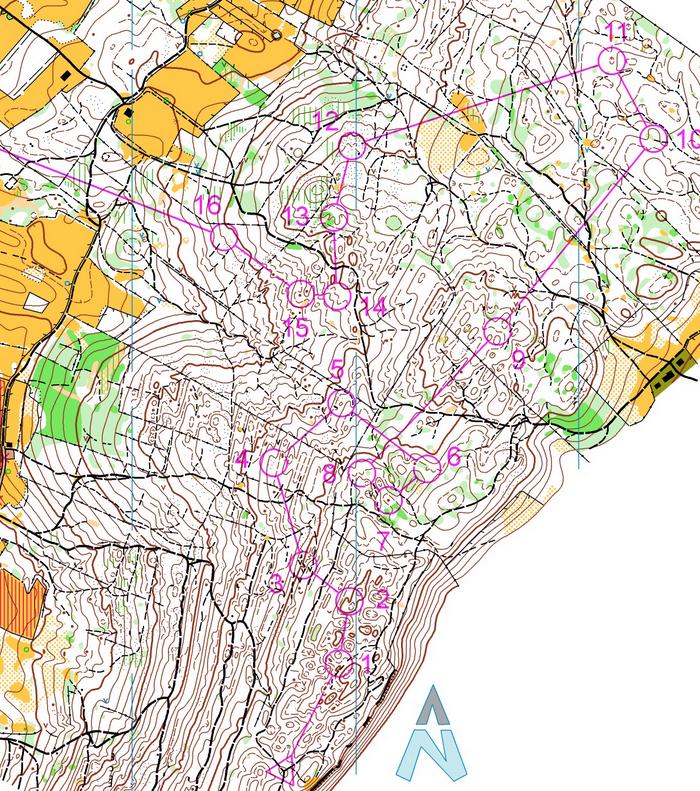
In an interesting article at the O-Ringen website multiple World Champion Thierry Gueorgiou gives insight into compass use from his point of view. Gueorgiou is known to be one of the best direction runners, using hours upon hours to improve his technique. Still he is far from perfect according to himself. - I would still say that around 60% of my mistakes are due to inefficient use of my compass, Gueorgiou comments in the article.

This is my favorite one and the best way I found to keep my compass abilities to an acceptable level

Below some interesting points from the article are addressed:

  • In the introduction, Gueorgiou discusses the fact that in detailed, Scandinavian terrain, you can follow the direction accurately also without using the compass (by exploiting the details, e.g. contours) – while in typical French terrain, your only chance to “survive” is to carefully follow the direction given by your compass. One additional point not made in the article is worth mentioning here: When Scandinavian runners run typical compass-legs in continental type terrain (or other terrain with less details), they are often slower than the continental runners because they try to orienteer like back home in Scandinavia; trying to use the map very actively in keeping the direction – using the few details present to aid in keeping the direction instead of trusting the compass. But note that doesn’t mean that you shouldn’t read the map when direction-running – just in a different way (as Gueorgiou also points out).
  • Gueorgiou highlights how compass use is not only important in flat areas – just as much in other areas in order to avoid parallel mistakes (the mistakes which can really cost a lot of time).
  • It is also highlighted how compass work is a way to save some mental energy – as you don’t have to concentrate as hard as when orienteering from detail to detail.
  • For a short leg “90% of the work is already done if you run with an accurate direction”.
  • Gueorgiou highlights the keyword “consistency” when talking about compass use in the article. I would add another word: “Trust”. You need to trust your abilities (and of course first build up your abilities to a point where they are worth trusting…). If you take a look at GPS-tracking from the big races, there are two types of direction mistakes; the ones where the direction is really wrong (ref. “consistency”), and the ones where the direction is right but the runner doesn’t trust his/her own abilities and starts to search early or change direction before approaching the control “on a hunch” (ref. “trust”). The latter type are seen nearly as often as the first type – and here exercise must be made more on a mental plane.
How to improve

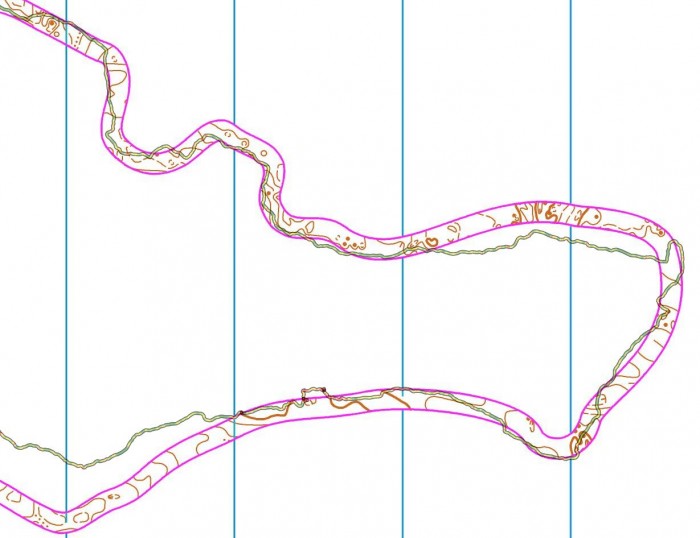
The final part of Gueorgiou’s article discussed how to improve your compass work. It might surprise many that the main training exercise Gueorgiou advises you to do in order to accelerate your compass routine, is corridor orienteering with a very narrow corridor on a contour map – preferably with a lot of bends. - This is my favorite one and the best way I found to keep my compass abilities to an acceptable level, Gueorgiou comments. What Gueorgiou doesn’t tell in this article, is that you should do them in the dark – at least that’s how he prefers them.

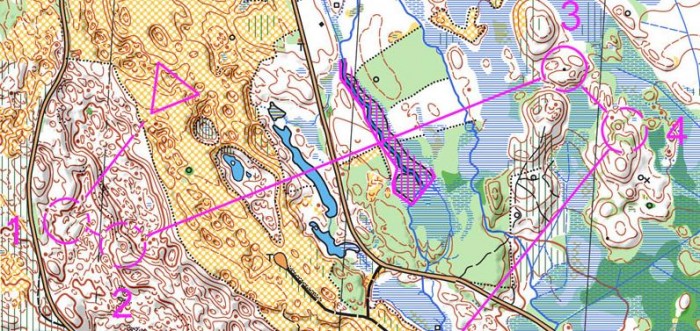
Last winter I joined Gueorgiou on one of his narrow night-o corridors on a contour map in Portugal. A real challenge – even at slow speed. Below is the successful part of my training… At this point it is tempting to finish the article with the infamous “don’t try this at home” statement, but I guess that’s exactly what you should do…

PS! In my opinion, you can also benefit from other, more targeted compass training exercises if you are on a lower technical level than Gueorgiou.

157

Illustration: Corridor training, Portugal, February 2012 (NOT Gueorgiou’s route). See here for how to prepare your own corridor training in OCAD

Full article

If you haven’t read the full article yet, head over to oringen.se and read it now. It is worth the read for sure:

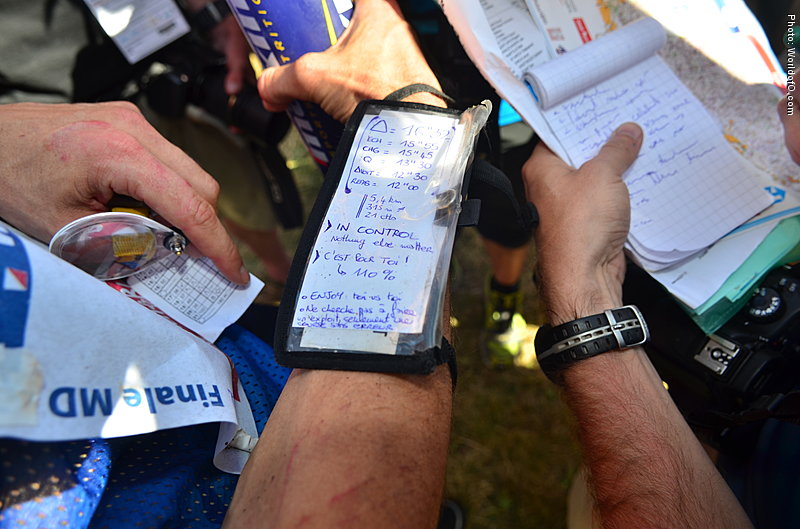
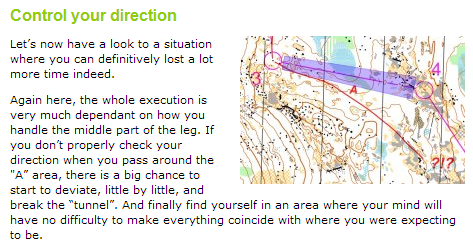
control_direction
Screenshot from the article at O-Ringen.se – read the full article here.

HeadCam analysis with local videos in 2DRerun

Posted by Jan Kocbach, 03 Mar 2013@16:00

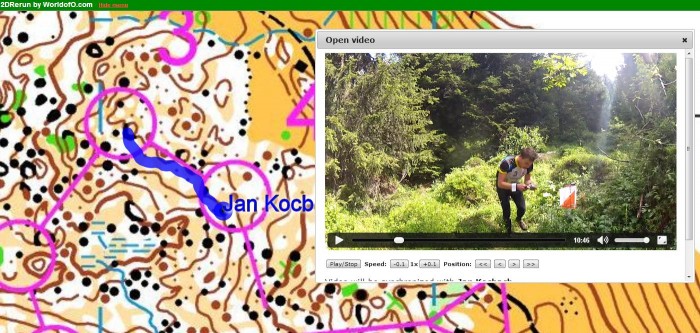
2drerun_video

2DRerun has been updated with new functionality for HeadCam analysis. The HeadCam analysis works with local video-files directly from your harddisk – and can e.g. open files directly from a GoPro Hero2 without conversion. That means that you do not need to wait for upload to YouTube, Vimeo or other online video services.

To perform HeadCam analysis in 2DRerun:

  • Open a map/route in 2DRerun in the usual way
  • Press the key “H” (or click “H” in the menu to the right) to open the HeadCam analysis dialog window
  • Choose a video from your harddisk
  • Calibrate video with GPS track by (1) first moving the video to a known position, then (2) clicking at the corresponding position at the map, and finally (3) clicking “Synchronize video and GPS at the current position”. Calibration is very fast – usually done in a few seconds.
  • To move around, you need to use the video’s position slider (or the buttons below the video)

Some tips:

  • Tip 1: You can resize the video window as you like, and also move it around
  • Tip 2: With small video files or fast computer you can play the video in 2x or 3x speed.
  • Tip 3: The Google Chrome browser supports more video formats than other browsers. Please use this browser if possible.

All video formats which are supported by HTML5 in your browser are supported. This includes, for example, MP4 videos. Videos from GoPro Hero2 work without problem – but you might need a quite fast computer for large videos. Videos from GoPro Hero3 do not work directly in the current version of Google Chrome, but will be supported in future versions of Chrome (you can download and install a developer version of Google Chrome here in which videos from GoPro Hero3 work).

2DRerun has not previously had any functionality for HeadCam analysis, but the big brother 3DRerun has had this possibility. In 3DRerun, however, it has not been possible to do HeadCam analysis with video from the local harddisk (if you did not install your own webserver on your local computer). Note that the functionality in 2DRerun is currently only for files from the local harddisk, i.e. YouTube/Vimeo is only supported in 3DRerun.

What is effective technical training?

Posted by Jan Kocbach, 18 Nov 2012@12:04

technicaltraining

Reading an article about effective technical training in sports, I noticed that  the same overall rules of thumb can be used for orienteering technical training as well. Or what do you think?

You need to have a targeted focus for developing/improving your technique on all “normal” trainings.

The simple rules set up in the article are:

  • You need to have a targeted focus for developing/improving your technique on all “normal” trainings. I.e. every time you run a training, local race etc., you need a targeted focus. “All training is technical training” characterizes the best. Trainings in which it is possible to target the most important challenges you have as an orienteer will therefore be the best trainings for you. And remember: You don’t only need o-technical training as an orienteer, you also need to consider your running technique, intake of fluids/food during competitions, etc.
  • Train technique in over-speed. If you can use your technique in a relaxed way in 10-20% higher speed, you will manage to apply your technique relaxed in competition speed in competitions.
  • “Learn from the master”. Run behind/together with another athlete in order to learn from eachothers strenghts.

Don’t forget these useful elements when planning your technical training!

Orienteering specific exercises

To specifically improve your orienteering technique, we have got a lot of exercises here at O-training.net:

1st control training Many courses with only start and one or two controls. Several people start together (minimum of two), and the goal is to locate your position and run to the first control as fast as possible after turning the map around. Overspeed orienteering, Sprint orienteering
Attackpoint identification training A special course is made in OCAD in which the area around the control is whited out. The runner must identify an attackpoint outside the whited out area, use the compass to get through the whited out area and into the control circle, and then orienteer accurately the last part to the control location. Compass, Attackpoints, Inside the control circle
Book reading while running The best orienteers read the map at close to maximum speed. They also have a high map reading frequency, i.e. they look at the map very often. Reading a book or a comic (or even a map) while running is a good exercise in order to train map reading frequency. Map reading
Brown map A course on a contour-only map (brown map). The runner must focus on the contours in his/her orienteering as this is the only information on the map. Many variants are given. Contours, Map reading
Build contours in sand Build the contours contained in a map either in sand or snow in order to show that you understand the concept of contours. This is a beginner exercise. Contours
Circular contour map Course on a circular contour-only map without north-lines. As the map is without north-lines, the runners can not use the compass to adjust the map to north, and thus it is necessary to concentrate more on reading the contours. Contours, Map reading
Circular map Course on a circular contour-only map without north-lines. As the map is without north-lines, the runners can not use the compass to adjust the map to north, and thus it is necessary to concentrate more on the map reading. Map reading
Compass between paths Compass-training in which the legs to be run are between two roads/paths. This makes evaluation easier as you can easily measure how far you are from the control. You also avoid big mistakes / a lot of searching. Compass
Compass training in pairs The front runner has a white paper with only the course. The runner behind has a normal map with the same course. The front runner shall run on compass while the runner behind controls where they are. Exchange maps at each control. Compass
Control location memory Variant of map memory where you get a certain time to memorize a number of control locations. Then after a pause, you shall draw the controls on a blank map. Typically done with a physical work period (e.g. running) in the pause between memorizing and drawing on the map. Map memory, Theoretical exercise
Control picking Run a course consisting of a lot of short legs with many changes in direction. Compass, Map reading, Flow
Corridor orienteering A corridor is drawn on the map, and the runner is to be inside the corridor at all times. The difficulty of the exercise can be adjusted by varying the width of the corridor, the terrain, the intensity etc. It is best to use GPS for evaluation of the exercise. Compass, Map reading, Flow, GPS evaluation
Course planner for competition Take the job as course planner for a competition. Route choice, Theoretical exercise, Route planning
Downhill intervals Run fast uphill and orienteer downhill while you are tired (overspeed). There are many variants – some of them are described below. Also called Sævig intervals in Norway. Concentration, Overspeed orienteering
Downhill orienteering Run a downhill orienteering course in overspeed, i.e.faster than you normally would do in a competition. Flow, Overspeed orienteering
Draw simplification map Draw a simplification map of a leg / a course. A simplification map is a map containing only the details which are necessary to use in the orienteering. There is also a variant involving map memory. It is instructive to run the course on the simplification map afterwards. Map memory, Simplification, Theoretical exercise
Fast relocation A group of 3-6 runners run together. Only the leader is allowed to read the map. When approaching the area around a control, everybody is allowed to look at the map, and shall relocate and find the control as fast as possible. Take turn on being the leader. Map reading, Map memory, Relocation, Terrain memory
Fog training The map is removed in most parts of the course – only some circles of the map is left in some places. The runner must use the compass to get between the areas with details. There may/may not be map inside the control circles. Compass
Follow the contour Course where only a single contour is shown between controls (or between some of the controls). Good to use GPS in evaluation of the training. Contours, GPS evaluation
GPS Distance evaluation Build up an accurate feeling for distance evaluation in different terrain types using your GPS. Try to run a specified distance in the forest (without looking at your map or GPS), e.g. 100 meters, and check your GPS when you think you have run this distance. Repeat in different terrain types / on paths etc. Distance evaluation, GPS evaluation
Head-up training Take a normal course and run it. However, instead of actually going to the control, just go to a spot where you can see the control (or the feature if there aren’t markers put out). Simplification, Terrain memory
Indoor orienteering Orienteering race indoors, typically in a gym. Good exercise if it is not possible to run outside – also a good exercise for beginners. Map reading, Concentration
Keep the pen running Take any map, and draw your planned route choice while keeping the pen running all the way from start to finish – never stopping even for half a second, planning your route as you draw. Route choice, Flow, Theoretical exercise, Route planning
Leg splitting Run a course with several long/half-long legs. Before leaving a control, have your attackpoints for the leg and your route for the leg ready. Method: For each leg, divide the leg into parts by identifying your attackpoints, i.e. the points on the leg which are your safe points where you need to be 100% sure about where you are. Mark these attackpoints mentally. Attackpoints, Route planning
Leg splitting – theoretical Take a course with several long/half-long legs. For each leg, divide the leg into parts by identifying your attackpoints, i.e. the points on the leg which are your safe points where you need to be 100% sure about where you are. Mark these attackpoints on the map, and then continue with drawing your planned route for the leg. Repeat for all legs in the course. Simplification, Route choice, Theoretical exercise, Route planning
Line orienteering A line is drawn on the map, and the runner is to be on the line at all times. The difficulty of the exercise can be adjusted by varying the terrain, the intensity etc. It is best to use GPS for evaluation of the exercise. Contours, Map reading
Map memory The runner gets a map showing the next control, and must memorize the leg. At each control, the runner gets another control. Map memory, Concentration
Map memory duo Map memory exercise in which two runners run together. At the start, the first runner memorizes the leg to the first control – then gives the map to the second runner. The first runner then runs to the first control – the second runner memorizes the leg to the second control while running behind. At the second control, the first runner gets the map again. Continue this way through the course, never stopping at the control. Map memory, Simplification
Map surveying Map surveying is a good exercise in order to understand properly how a map is built up. Map reading, Theoretical exercise, Distance evaluation, Map understanding
Map without paths Make a course on a map from which all paths have been removed. Map reading, Map contact
Mass-start legs You have a normal orienteering course. A group of 3-6 runners run together, and at each control there is a new mass-start. The goal is to be the first to the control each time. For 4 runners, you can e.g. have a scoring 4-2-1-0. Restart as soon as possible. Overspeed orienteering, Pressure handling
Micro A normal course is made, but for each control, there are several other controls within the control circle. There is no code on the controls, so the runner must decide which control is the correct one by studying the map and the control description. Some kind of penalty (penalty loop running, time penalty etc.) is given for each wrong control. Map reading, Simplification, Attackpoints, Map contact, Inside the control circle, Control description
Multi-mass-start relay Relay with very short legs, in which there is a new mass-start for each leg. Each runner runs 4 legs, and there are 3-4 runners in each team. The first team coming in on each leg gets 4 points, the second 2 points, the third 1 point – the rest zero points. Points are added for the team. The next leg starts when the second last runner returns from the previous leg. Very intensive relay training with a lot of pressure on the runners. We usually get several DSQ’es as the runners do not tackle the pressure. This relay training is a lot of fun! Overspeed orienteering, Pressure handling
Never stop Run a normal course, but you are never allowed to stop! That is, you have to keep running all the time. If you don’t know where to run or need to relocate, you have to keep running on the spot (but this should be avoided, you should rather run more slowly ahead of this point). Map reading, Flow, Sprint orienteering, Map contact, Speed adaption
Night orienteering Running at night with limited visibility, is a very good map reading exercise as one has to be more exact in ones orienteering. Compass is also more important at night than in daytime. A normal course will do, but e.g. a corridor is even more interesting. Compass, Map reading
No-map compass training A course on a white sheet of paper with only the course drawn (no details at all). Compass, Distance evaluation, GPS evaluation
One man relay Several courses from the same starting point – one runner runs all courses. Mass start. Typically some parts of the courses overlap. Concentration, Overspeed orienteering
Orienteering intervals Several short courses (alternatively parts of a long course) which are run at high speed, with a pause between each course. Several variants are described. Concentration, Overspeed orienteering, Speed adaption
Play Catching Features Play the computer game Catching Features. Map memory, Theoretical exercise, Mental exercise, Terrain memory
Prolong the control Focus on making each control easier by “prolonging the control”. Prolonging the control means to find features close to the control which are wider than the feature the control is placed on, i.e. you can have a larger error in your compass course and still find the control easily. There are several variants of this training – also a theoretical exercise. Simplification, Theoretical exercise, Attackpoints, Inside the control circle
Reduced map compass training Make a course on a reduced map, where the reduced map is made by removing many details in such a way that the compass is the only option for orienteering. For example, you can have a map with only black details left. Use this for compass training. Compass
Reduced map training Make a course on a reduced map, where the reduced map is made by removing many details. For example, you can have a map with only vegetation details left. Map reading, Map understanding, Map contact
Remove map between controls Exercise for compass orienteering in which the area between controls is erased using OCAD or drawn black using a covering marker pen. You need to relocate with the features available when you come into the part with map. Compass, Relocation
Route choice testing Course with many long legs with route choice alternatives. The time for the different routes are compared. See below for several variants. Comparing GPS tracks after the training is a very good way to evaluate the training. Route choice
Route to Christmas The Route to Christmas series gives you a lot of Route Choice cases to solve. You first get to see a leg without routes, and then the routes of the runners. Route choice, Theoretical exercise, Route planning
Run on simplification map You get a map in which only the details which are needed for the orienteering are included. This exercise should be followed up with comparison of the full map and the simplified map, and an exercise where you shall draw your own simplification map. Simplification
Small circle – Big circle A course is given, and for each control in the course, there is a small ring denoting the attackpoint. In the forest, the attackpoint is marked by an orienteering flag, and the real control is only mared using a piece of paper. The runner shall run with relatively high speed to the attackpoint, and then continue carefully to the control. Simplification, Attackpoints, Inside the control circle
Speed adaption O-intervals Interval training on map in which the first part of each interval is very easy orienteering (typically one long leg with only straight road/path) – the second part tricky orienteering (slow speed). Run high speed in the easy part, and adapt speed to orienteering in the second part. Especially good as sprint training by simulating the change between urban and forest orienteering in a sprint race. Overspeed orienteering, Sprint orienteering, Speed adaption
Step counting Distance evaluation through step counting. Measure a distance on the map (e.g. 100 meters), and run the same distance in different terrain types and count your steps. Repeat until you get familiar with how many steps you need for a certain distance. Distance evaluation, GPS evaluation
Straight line orienteering Straight lines are drawn between objects on a normal map. Use compass to go straight between the controls while reading the map along the line. For skilled orienteers, run at high intensity. Both compass and map reading exercise. Compass, Map reading

All of the exercises are sorted on type here:

RouteChoice Challenge: Long decisive leg in Swiss Champs Long

Posted by Jan Kocbach, 20 Aug 2012@5:00

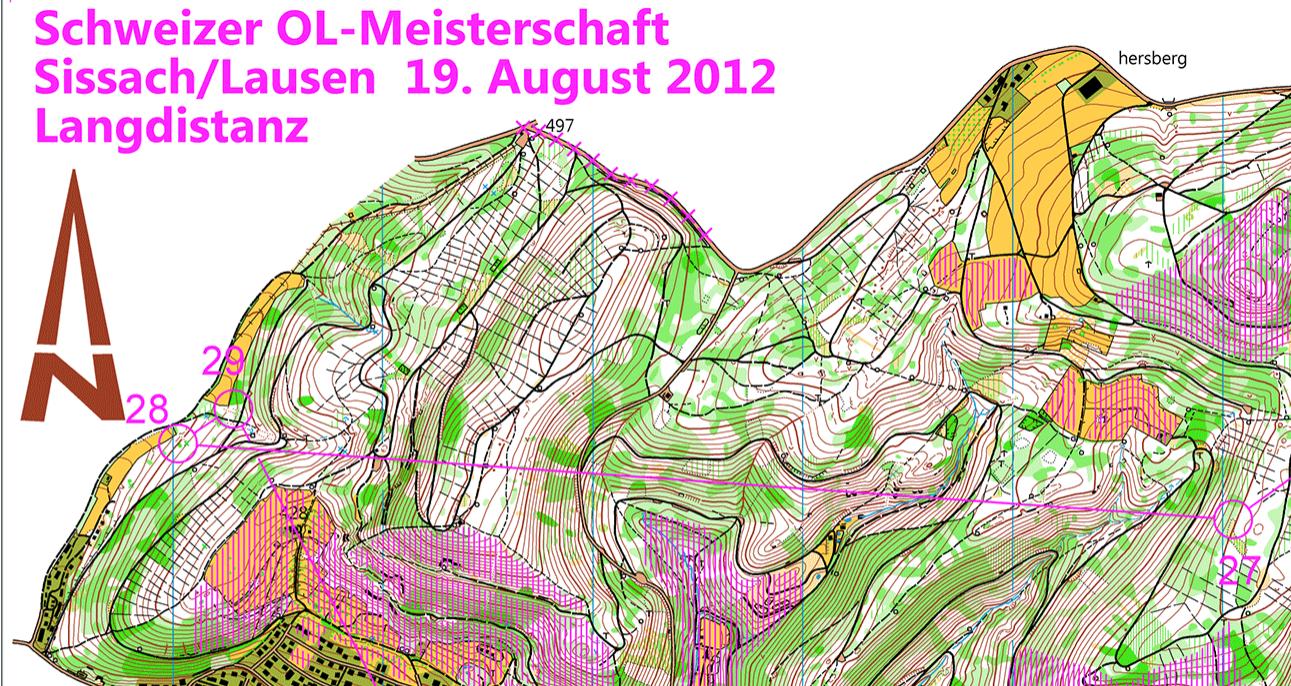
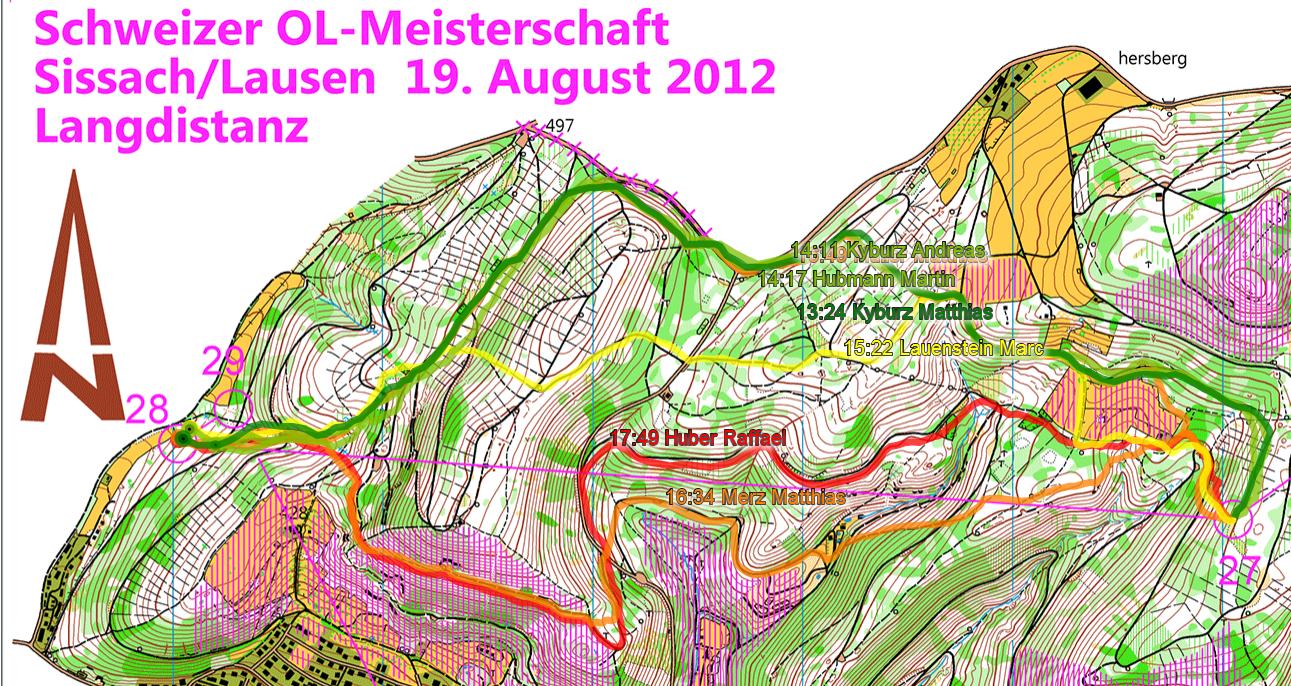
The long leg from control 27 to 28 decided the mens class in the Swiss Championships long distance yesterday. At the start of the leg three runners were fighting for gold: Matthias Kyburz, Matthias Merz and Marc Lauenstein. With good performance on this leg, Kyburz took home the gold medal.

Can you find the “golden solution”? First take a look at the leg (click for larger image), then draw your choice in the WebRoute (without cheating and looking at the “solution”), and finally take a look at the best times run on the leg below.

swisschamps2728noroute

Powered by WebRouteWorldofO.com

Note that the split times given on the illustration below are GPS splits which may be some seconds off. See also:

swisschamps2728route

WebRoute: Route choice leg Canada

Posted by Jan Kocbach, 04 Jun 2012@12:00

Time for some theoretical route choice thinking: This long leg is from a route choice training session that at the recent Orienteering Canada HPP Training Camp in Canmore.

Powered by WebRouteWorldofO.com

2DRerun: Two very WOC Middle relevant races

Posted by Jan Kocbach, 29 May 2012@8:00

middle
13 World Champions on the start list – two very WOC Middle relevant races: The ‘3 jours du Haut Jura 2012′ is a race worth taking a closer look at. Saturday’s middle distance had Philippe Adamski and Sara Lüscher on top – Monday’s middle distance had Mats Haldin and Helena Jansson on top.

These were training races for many of the runners, whereas it was a WOC selection race for France, Finland and Czech Republic – so you should not read too much out of the results. Still it is notable to see that European champions from last week in Sweden Olav Lundanes and Simone Niggli are beaten both days.

Lundanes says to the orientering.no that he did the biggest mistake of the year, and still does not understand what he did out there. Note however that Lundanes was faster than Adamski on the rest of the course – and that Adamski did not have a perfect race either.

GPS-analysis in 2DRerun

Open the links below to take a look at the race in 2DRerun:

Thanks to Francois Gonon and Matthieu Puech for preparing the race in 2DRerun.

Results Saturday

Men

  1. Philippe ADAMSKI       85  FRA                T.A.D.                35:02
  2. Frédéric TRANCHAND     88  FRA                OE42                  35:18
  3. Fabian Hertner         85  SUI                OLV Baselland         35:22
  4. François GONON         79  FRA                O JURA                35:36
  5. Jan Prochazka          84  CZE                                      36:00
  6. Jonne Lehto            84  FIN                                      36:44
  7. Olav Lundanes          87  NOR                                      36:57
  8. Audun Weltzien         83  NOR                IFK Göteborg          37:02
  9. Jere Pajunen           86  FIN                Kalevan Rasti         37:13
 10. Lucas BASSET           91  FRA                CSMR                  37:32
 11. Olli-Markus Taivainen  89  FIN                                      37:44
 12. Hannu Airila           85  FIN                Kalevan Rasti         38:08
 12. Baptiste Rollier       82  SUI                ANCO                  38:08
 14. Vincent COUPAT         86  FRA                OTB                   38:19
 15. Mats Haldin            75  FIN                                      38:30
 16. Stepan Kodeda          88  CZE                                      38:34
 17. Andreas Kyburz         88  SUI                OLK Fricktal          39:00
 18. Tero Föhr              80  FIN                                      39:13
 19. Philipp Sauter         89  SUI                OLG Chur              39:19
 20. Vojtich Kral           88  CZE                                      39:20

Women

  1. Sara Lüscher           86  SUI                OLC Kapreolo          34:35
  2. Simone Niggli          78  SUI                OLV Hindelbank        34:41
  3. Venla Niemi            90  FIN                                      35:07
  4. Helena Jansson         85  SWE                Leksands OK           35:15
  5. Katri Lindeqvist       80  FIN                                      35:22
  6. Saila Kinni            87  FIN                                      35:38
  7. Monika Topinkova       80  CZE                                      35:39
  8. Sofia Haajanen         87  FIN                                      36:20
  9. Vendula Klechova       81  CZE                                      36:25
 10. Rahel Friederich       86  SUI                OLG Basel             36:28
 11. Mari Fasting           85  NOR                                      36:45
 12. Amélie CHATAING        86  FRA                NOSE                  37:30
 13. Eva Jurenikova         78  CZE                                      37:31
 14. Minna Kauppi           82  FIN                                      37:52
 15. Bettina Aebi           90  SUI                OLG Herzogenbuchsee   37:56
 16. Dana Safka Brozkova    81  CZE                                      38:18
 17. Brigitta Mathys        90  SUI                ol.biel.seeland       38:21
 18. Lenka Poklopova        89  CZE                                      38:55
 19. Céline DODIN           79  FRA                HVO                   38:56
 20. Judith Wyder           88  SUI                OLG Thun              38:59
Results Monday

Men

  1. Mats Haldin            75  FIN                                      33:33
  2. Fabian Hertner         85  SUI                OLV Baselland         33:34
  3. François GONON         79  FRA                O JURA                33:51
  4. Baptiste Rollier       82  SUI                ANCO                  33:59
  5. Hannu Airila           85  FIN                Kalevan Rasti         34:07
  6. Philippe ADAMSKI       85  FRA                T.A.D.                34:16
  7. Audun Weltzien         83  NOR                IFK Göteborg          34:44
  8. Jarkko Huovila         75  FIN                Kalevan Rasti         34:53
  9. Andreas Kyburz         88  SUI                OLK Fricktal          35:13
 10. Florian Howald         91  SUI                OLG Herzogenbuchsee   35:17
 10. Martin Hubmann         89  SUI                OL Regio Wil          35:17
 12. Vincent COUPAT         86  FRA                OTB                   35:20
 13. Olav Lundanes          87  NOR                                      35:21
 14. Pavel Kubat            91  CZE                                      35:25
 15. Milos Nykodym          90  CZE                                      35:26
 16. Jonne Lehto            84  FIN                                      35:53
 17. Tero Föhr              80  FIN                                      36:08
 18. Jan Prochazka          84  CZE                                      36:17
 19. Jere Pajunen           86  FIN                Kalevan Rasti         36:20
 20. Matthias Kyburz        90  SUI                OLK Fricktal          36:37

Women

  1. Helena Jansson         85  SWE                Leksands OK           32:32
  2. Minna Kauppi           82  FIN                                      32:34
  3. Simone Niggli          78  SUI                OLV Hindelbank        33:22
  4. Rahel Friederich       86  SUI                OLG Basel             35:04
  5. Saila Kinni            87  FIN                                      35:36
  6. Dana Safka Brozkova    81  CZE                                      36:14
  7. Vendula Klechova       81  CZE                                      36:32
  8. Amélie CHATAING        86  FRA                NOSE                  37:06
  9. Sofia Haajanen         87  FIN                                      37:27
 10. Céline DODIN           79  FRA                HVO                   37:51
 11. Venla Niemi            90  FIN                                      38:02
 12. Isabelle Feer          90  SUI                OLG Goldau            38:04
 13. Katri Lindeqvist       80  FIN                                      39:02
 14. Iveta Duchova          86  CZE                                      39:07
 15. Denisa Kosova          91  CZE                                      40:03
 15. Sophie Tritschler      90  SUI                OLG Zürich            40:03
 17. Martina Seiterle       89  SUI                thurgorienta          40:28
 18. Eva Jurenikova         78  CZE                                      40:35
 19. Sara Lüscher           86  SUI                OLC Kapreolo          41:09
 20. Léa VERCELLOTTI        89  FRA                OTB                   41:18

EOC Long Final: GPS Analysis

Posted by Jan Kocbach, 18 May 2012@17:51

A tough long distance with many long legs with route choice options – that were some of the ingredients in today’s long distance final at the European Championships in Skattungbyn, Sweden.

An important note about the illustrations: All time on the illustrations are GPS-times, i.e. not official split times. Thus time may be off by 5-10 seconds in some cases. For statistical analysis with many runners like presented in most of the illustrations, these offsets are considered to be not significantly alter the overall analysis in most cases. However, there may be cases where the conclusion could be slightly altered by using actual split times. Please add a comment below if you spot such cases, and the article will be updated accordingly.

This article is part of the EOC 2012 GPS-analysis series. In a cooperation with the EOC 2012organizers, World of O/O-training.net will do GPS-analysis after each of the EOC races in Sweden the coming week.

Analysis done in 2DRerun

The analysis in done using 2DRerun. You can make your own analysis of the EOC long distance in 2DRerun using the links above (note! long loading time as many routes must be loaded).

As a background for this article, you can use the map without any routes drawn – see the men’s map here and the women’s map here.

Men 2-3

The men’s course started with two short, technical legs before heading off on the first route choice leg to control number three:

menp1

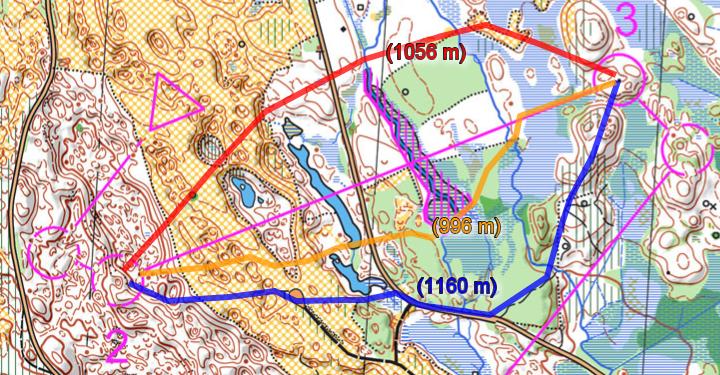
The leg to number three offered three main route choices – direct (around 1 km), left (around 50 meters longer) and right (around 150 meter longer than the direct choice). The direct route gave you a lot of marsh-running – the marshes being quite wet in this area. The right route gave you 150 meter on a road and 400 meter of a path – thus allowing you to hold higher speed than on the alternatives.

menp1r

Based on the routes run (see below), most of the good times are run to the right. There is also significantly less variance in the times, i.e. few poor times – a clear indication that the risk is lower on this route. On the other hand, the best time run on the left route is not much slower than the best time on the right route. Here both gold and silver medalists Lundanes and Merz went left. Novikov started out left, then changed his mind and went left. This lost him more time than would have been lost by just continuing right…

Men A-final: 2-3 (Legtimes)

1. Ionut Alin Zinca 5:56 +0:00
2. Fredrik Johansson 5:58 +0:02
3. Audun Hultgreen Weltzien 6:10 +0:14
4. Edgars Bertuks 6:13 +0:17
5. Mikhail Mamleev 6:14 +0:18
6. Jan Prochazka 6:14 +0:18
7. Frédéric Tranchand 6:14 +0:18
8. Olav Lundanes 6:16 +0:20
9. Milos Nykodym 6:18 +0:22
10. Matthias Merz 6:21 +0:25
12. Valentin Novikov 6:24 +0:28

Even if loosing time on number three, Lundanes is in the lead at control 3 due to a very good start in the two first legs:

Men A-final: 2-3 (Total times)

1. Olav Lundanes 9:29 +0:00
2. Mikhail Mamleev 9:35 +0:06
3. Matthias Merz 9:41 +0:12
4. Ionut Alin Zinca 9:47 +0:18
5. Edgars Bertuks 9:49 +0:20
6. Anders Nordberg 9:52 +0:23
7. Gernot Kerschbaumer 9:52 +0:23
8. Valentin Novikov 9:52 +0:23
9. Matthias Müller 9:54 +0:25
10. Oleksandr Kratov 9:58 +0:29

g23

Men 4-5

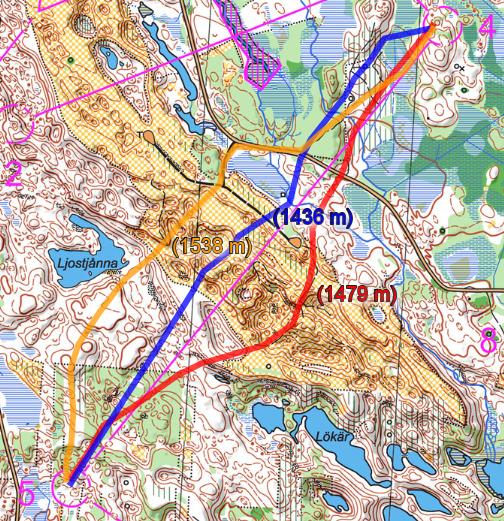
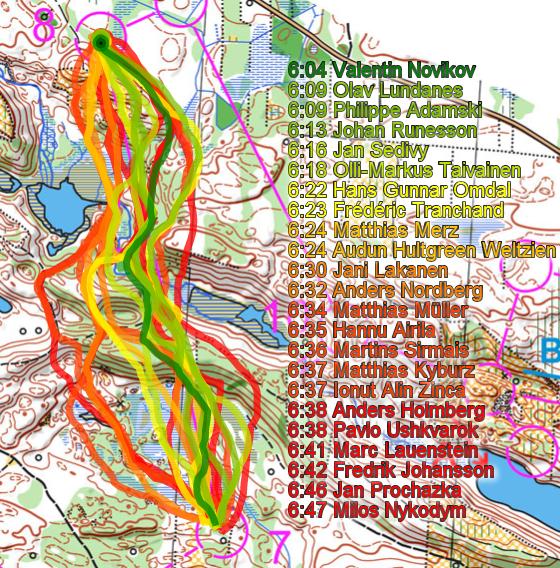
The next long leg was the leg from number 4 to number 5. This was a longer leg – but with less distinct route choices. Still it proved to be a leg which made a difference on the top of the results list.

g4-5

There are basically three main alternatives – direct (blue above) which is the shortest run by Lundanes. Left (red above, run by Novikov) which exploits a small path on part of the leg – paying with another 40-50 meters of running and right (orange above, run by Lauenstein) which has some road and path running – but being around 100 meters longer.

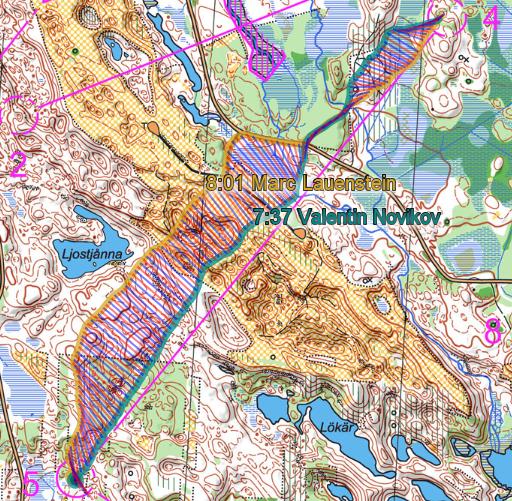
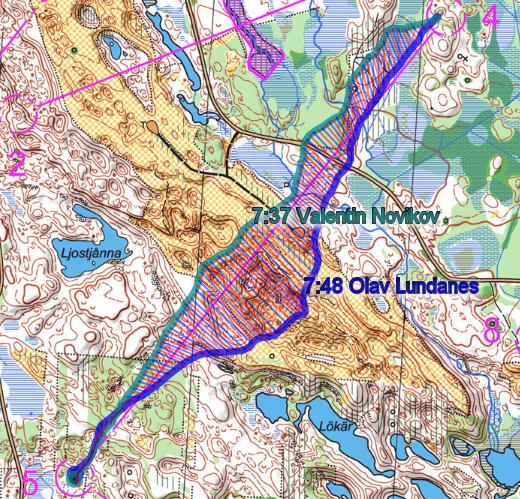
As you see from the comparisons below, the right variant takes you too far from the line without giving significantly better runnability – the runners are parallell when Lauenstein leaves the path, but Lauenstein then has further to run to the control.

The left and direct variants are very equal – the last part into the control is what makes the difference between Lundanes and Novikov.

g4-52

g4-53

Men A-final: 4-5 (Legtimes)

1. Valentin Novikov 7:36 +0:00
2. Anders Nordberg 7:49 +0:13
3. Olav Lundanes 7:50 +0:14
4. Matthias Merz 7:54 +0:18
5. Johan Runesson 7:54 +0:18
6. Oleksandr Kratov 7:57 +0:21
7. Marc Lauenstein 7:59 +0:23
8. Olle Kärner 8:00 +0:24
9. Martins Sirmais 8:04 +0:28
10. Fredrik Johansson 8:07 +0:31


Men A-final: 4-5 (Total times)

1. Olav Lundanes 18:20 +0:00
2. Valentin Novikov 18:32 +0:12
3. Matthias Merz 18:41 +0:21
4. Anders Nordberg 18:47 +0:27
5. Oleksandr Kratov 19:00 +0:40
6. Fredrik Johansson 19:13 +0:53
7. Gernot Kerschbaumer 19:13 +0:53
8. Martins Sirmais 19:16 +0:56
9. Dmitry Tsvetkov 19:18 +0:58
10. Mikhail Mamleev 19:20 +1:00

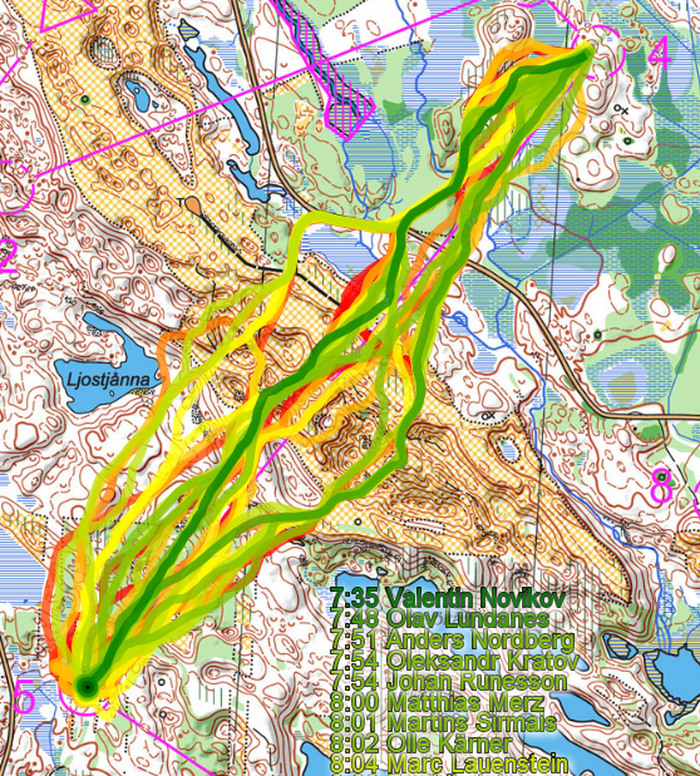
This leg from 4 to 5 is one of the deciding legs in the race – already here we have Lundanes, Novikov and Merz on top of the results list. These three also run 3 of the 4 best times on the leg.

Men 5-6

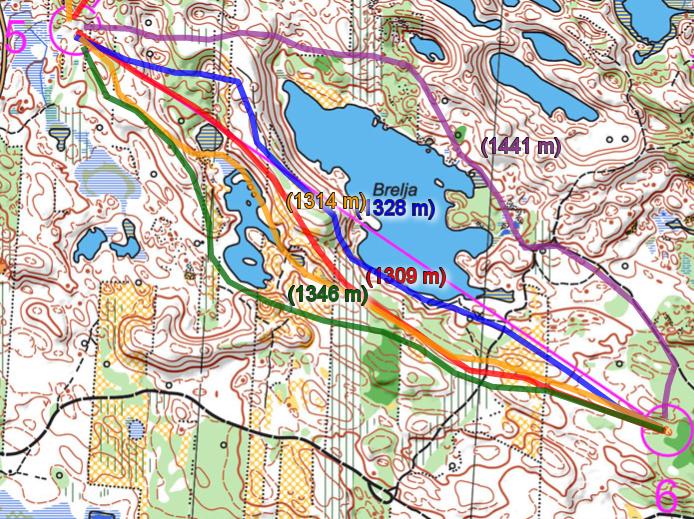
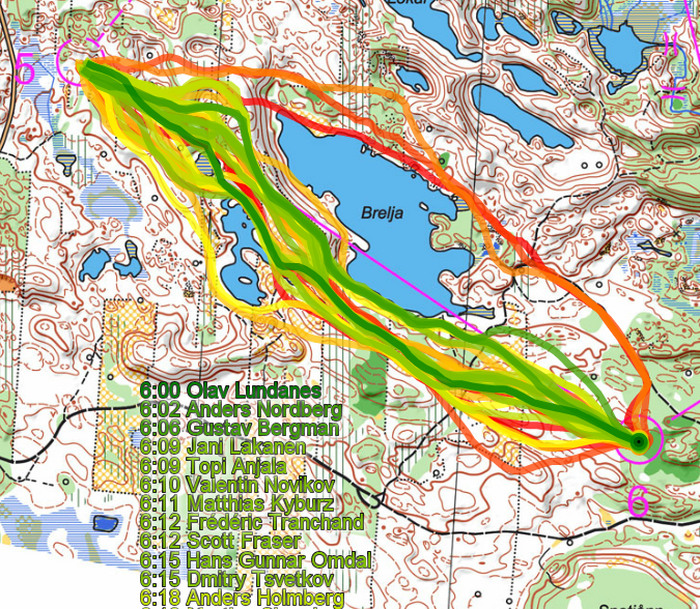
The leg from 5-6 gave a surprisingly wide spreading of routechoices – considering that there is fairly good runnability and relatively easy orienteering when staying close to the line. Below the main alternatives run are drawn. The around 20 top times are run on the three most direct variants – which vary only little in length.
g5-6


Men A-final: 5-6 (Legtimes)

1. Olav Lundanes 6:02 +0:00
2. Anders Nordberg 6:06 +0:04
3. Scott Fraser 6:10 +0:08
4. Valentin Novikov 6:11 +0:09
5. Matthias Kyburz 6:11 +0:09
6. Gustav Bergman 6:11 +0:09
7. Topi Anjala 6:11 +0:09
8. Frédéric Tranchand 6:12 +0:10
9. Hans Gunnar Omdal 6:16 +0:14
10. Jani Lakanen 6:16 +0:14
33. Matthias Merz 6:53 +0:51

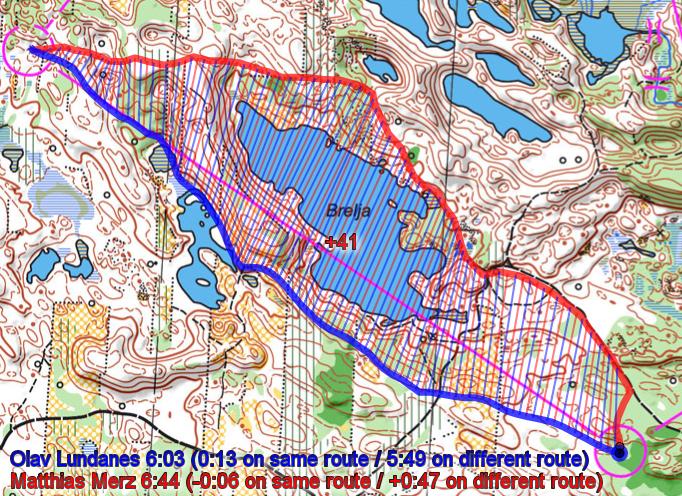
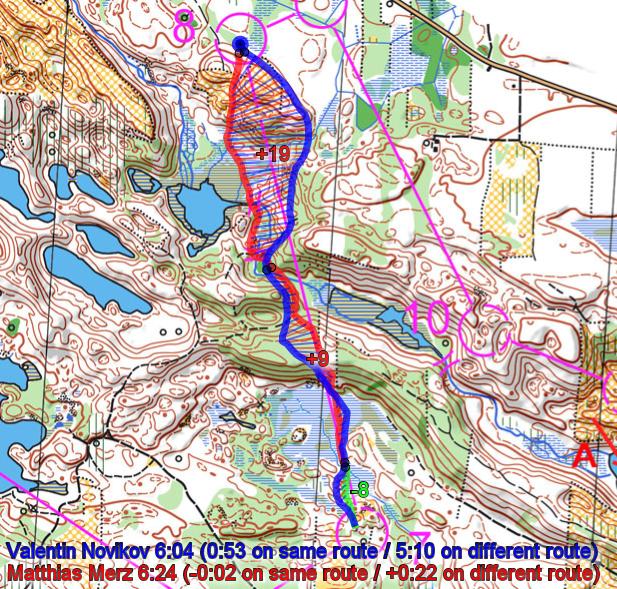
Fastest of all is Lundanes with a combination of the red and yellow variant – ahead of Nordberg who runs the blue variant. Novikov runs the red variant. At this leg Merz does a big routechoice error – running at the northern side of the lake (purple alternative) – loosing more than 50 seconds to Lundanes (could this be a direction error and not a pure routechoice error?). This is a very decisive point in the race. This northern routechoice gives some more path running, but as you can see, the runnability on Merz’s route at the north side of the lake is poorer than at the south side of the lake – especially in the rocky area.

merzlund


Men A-final: 5-6 (Total times)

1. Olav Lundanes 24:22 +0:00
2. Valentin Novikov 24:43 +0:21
3. Anders Nordberg 24:53 +0:31
4. Oleksandr Kratov 25:21 +0:59
5. Matthias Merz 25:34 +1:12
6. Dmitry Tsvetkov 25:38 +1:16
7. Martins Sirmais 25:38 +1:16
8. Hans Gunnar Omdal 25:40 +1:18
9. Gernot Kerschbaumer 25:46 +1:24
10. Mikhail Mamleev 25:54 +1:32

At this point in the race Merz has lost the initiative – and is more than a minute behind Lundanes in 5th. Lundanes is holding on to his lead – 21 seconds ahead of Novikov. Nordberg has the bronze position at this point.

Men 7-8

After control 7 the course changes characteristics – from the open, rather flat and stony terrain to hilly terrain with wet marshes. The leg from control 7 to control 8 is a leg where steep hills and marshes are obstacles on the way – forcing the runners to make a choice: Either climb the hill / wade through the marsh – or run around. The runners have not run many marshes yet in this race, and have thus not complete knowledge about how much slower the marshes are. There are some small paths a the middle of the leg which can be used to potentially increase the speed and make the orienteering easier, but these paths are not very good.

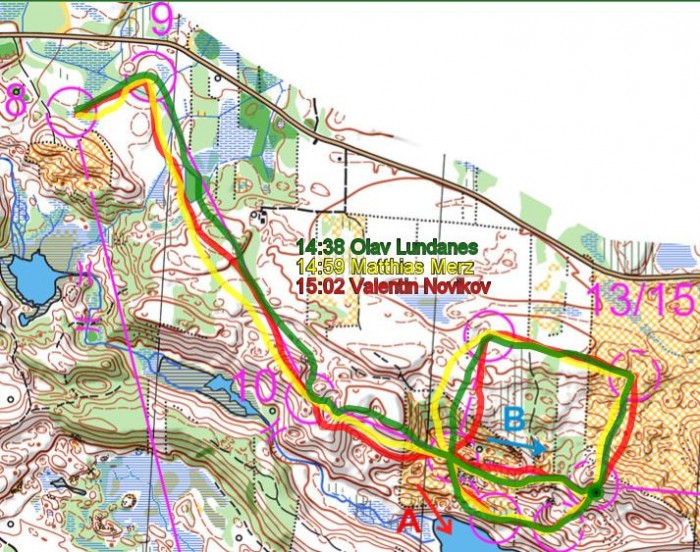
There are a number of alternatives (see below) – with lengths ranging from around 900 meter for the straightest route to around 1000 meters for the longest of the drawn routes (left, light blue). Based on a statistical analysis, you can simplified say that the straighter/shorter you run, the faster you are. Novikov is fastest ahead of Lundanes – both running straight/right variants (close to the red alternative below). Merz again looses more than 20 seconds by choosing a non-optimal route – loosing most of the time on the last part of the leg (see illustration below).

image

m7-8

merz2

Men A-final: 7-8 (Legtimes)

1. Valentin Novikov 6:07 +0:00
2. Olav Lundanes 6:12 +0:05
3. Philippe Adamski 6:13 +0:06
4. Johan Runesson 6:15 +0:08
5. Olli-Markus Taivainen 6:18 +0:11
6. Frédéric Tranchand 6:23 +0:16
7. Hans Gunnar Omdal 6:25 +0:18
8. Audun Hultgreen Weltzien 6:25 +0:18
9. Jan Sedivy 6:28 +0:21
10. Matthias Merz 6:31 +0:24

Men A-final: 7-8 (Total times)

1. Olav Lundanes 32:15 +0:00
2. Valentin Novikov 32:26 +0:11
3. Anders Nordberg 33:38 +1:23
4. Matthias Merz 33:42 +1:27
5. Martins Sirmais 34:14 +1:59
6. Johan Runesson 34:17 +2:02
7. Philippe Adamski 34:19 +2:04
8. Hans Gunnar Omdal 34:26 +2:11
9. Gernot Kerschbaumer 34:28 +2:13
10. Oleksandr Kratov 34:34 +2:19

Novikov gets even closer to Lundanes at this point – now being only 11 seconds behind – while Merz now is 1:27 behind. Swedish Runesson had a few good legs and is up at 6th place.
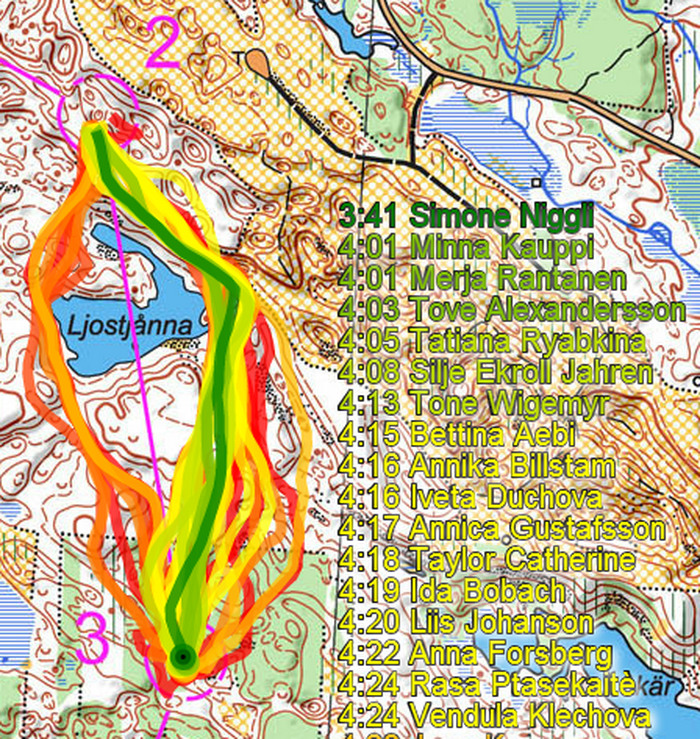
Men 8-18 (including forking part)

In the forking part Lundanes takes around 20-30 seconds on Novikov and Merz. Now the gap down to Novikov is at 36 seconds – nearly two minutes down to Merz.
Men A-final: 18. (Total times)

1. Olav Lundanes 46:51 +0:00
2. Valentin Novikov 47:27 +0:36
3. Anders Nordberg 48:41 +1:50
4. Matthias Merz 48:43 +1:52
5. Martins Sirmais 49:46 +2:55
6. Oleksandr Kratov 50:05 +3:14*
7. Johan Runesson 50:11 +3:20*
8. Frédéric Tranchand 50:26 +3:35*
9. Hans Gunnar Omdal 50:28 +3:37*
10. Pavlo Ushkvarok 50:31 +3:40*

men8-18

Men 18-19

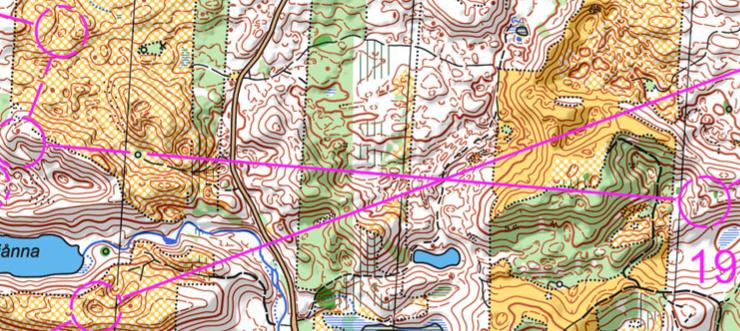
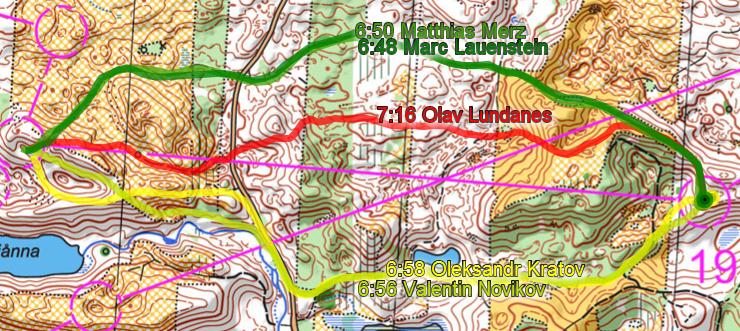
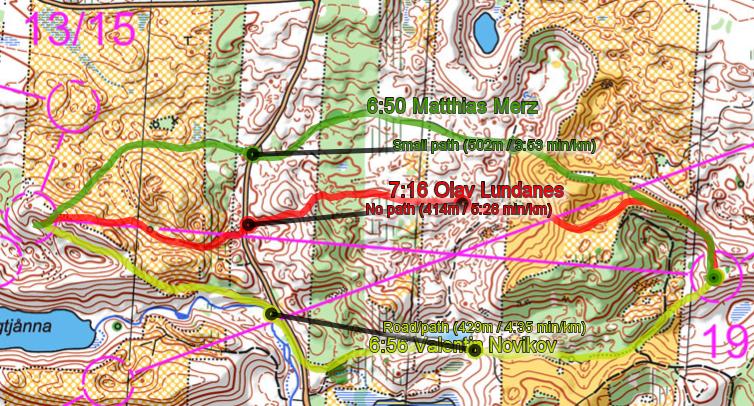
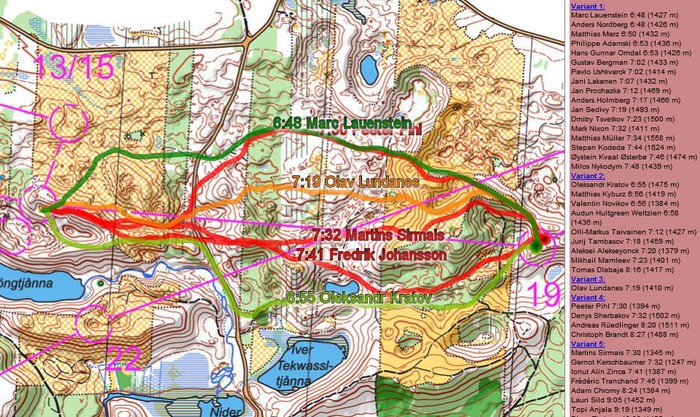
The men’s leg 18-19 is the leg where Lundanes looses most time in this race – by fighting straight (red route below) instead of using one of the alternatives around with better runnability and less hills. The northern route of Merz and Lauenstein is the fastest (green below) – exploiting the path at the north edge of the control and also saving some height compared to the direct route of Lundanes. The southern choice also has significant parts of path running. The third illustration below shows this difference in speed on the path/road compared to Lundanes in the hilly terrain.
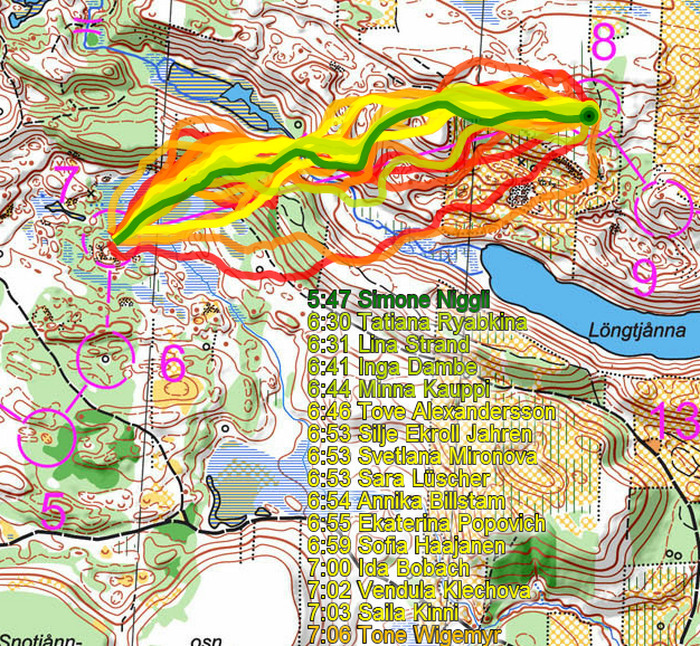
men18-19b

men18-19

men18-19c

Men A-final: 18-19 (Legtimes)

1. Marc Lauenstein 6:48 +0:00
2. Matthias Merz 6:50 +0:02
3. Anders Nordberg 6:53 +0:05
4. Hans Gunnar Omdal 6:53 +0:05
5. Philippe Adamski 6:53 +0:05
6. Valentin Novikov 6:56 +0:08
7. Oleksandr Kratov 6:58 +0:10
8. Audun Hultgreen Weltzien 6:58 +0:10
9. Gustav Bergman 6:58 +0:10
10. Pavlo Ushkvarok 7:02 +0:14
16. Olav Lundanes 7:16 +0:28

Here the different variants on the leg are shown.


Men A-final: 18-19 (Total times)

1. Olav Lundanes 54:07 +0:00
2. Valentin Novikov 54:23 +0:16
3. Matthias Merz 55:33 +1:26
4. Anders Nordberg 55:34 +1:27
5. Oleksandr Kratov 57:03 +2:56
6. Hans Gunnar Omdal 57:21 +3:14
7. Marc Lauenstein 57:24 +3:17
8. Pavlo Ushkvarok 57:33 +3:26
9. Philippe Adamski 57:40 +3:33
10. Martins Sirmais 57:46 +3:39

Lundanes keeps his lead after this bad routechoice – but the lead is now reduced to 16 seconds. Merz eats up nearly half a minute – and takes back the third position from Nordberg.

Men 21-22

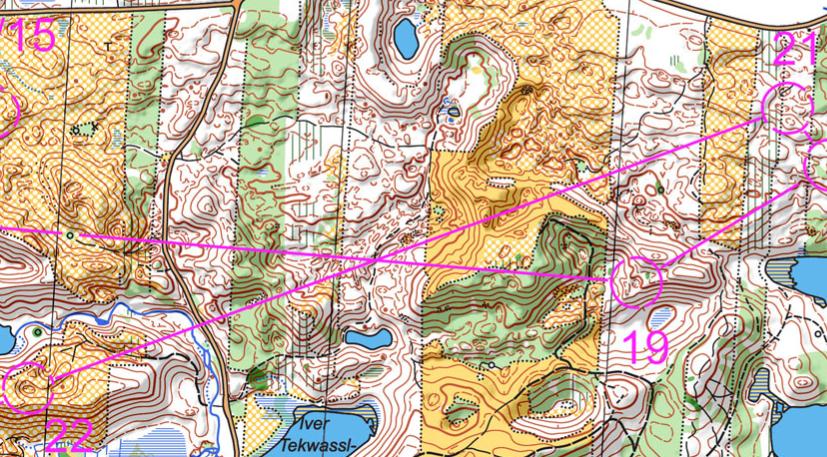
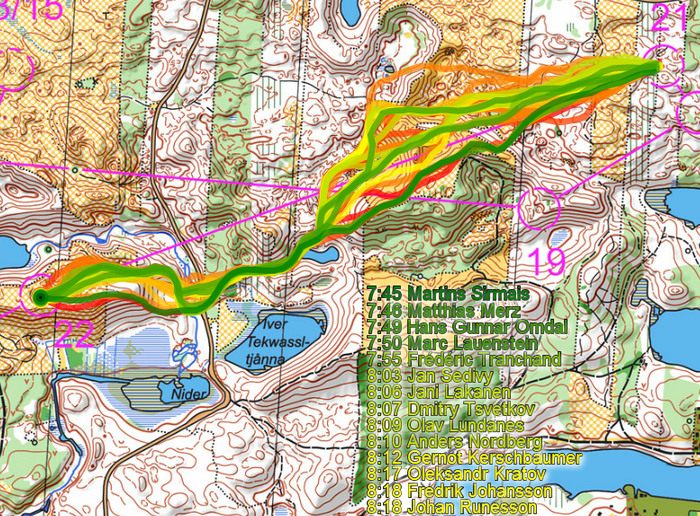
The leg from 21 to 22 does not offer so big route choice alternatives – but is still a bad leg for both Lundanes and Novikov who loose 24 and 39 seconds to Merz, respectively. The trick on this leg is to keep close to the line on the first part of the leg (as there is not much to earn with respect to runnability with moving away from the line), and exploiting the paths in the seconds part of the leg.

21-22

A slight left alternative is the fastest here. Both Lundanes and Novikov loose time by running too far to the north at the first part of the leg as you can see from the illustrations below.

Men A-final: 21-22 (Legtimes)

1. Matthias Merz 7:46 +0:00
2. Martins Sirmais 7:47 +0:01
3. Hans Gunnar Omdal 7:49 +0:03
4. Marc Lauenstein 7:51 +0:05
5. Frédéric Tranchand 7:53 +0:07
6. Jan Sedivy 8:02 +0:16
7. Dmitry Tsvetkov 8:05 +0:19
8. Anders Nordberg 8:08 +0:22
9. Jani Lakanen 8:08 +0:22
10. Olav Lundanes 8:10 +0:24
21. Valentin Novikov 8:25 +0:39

imagemm


Men A-final: 21-22 (Total times)

1. Olav Lundanes 65:33 +0:00
2. Valentin Novikov 66:13 +0:40
3. Matthias Merz 66:41 +1:08
4. Anders Nordberg 67:17 +1:44
5. Marc Lauenstein 68:43 +3:10
6. Hans Gunnar Omdal 68:47 +3:14
7. Oleksandr Kratov 68:51 +3:18
8. Martins Sirmais 69:08 +3:35
9. Pavlo Ushkvarok 69:18 +3:45
10. Philippe Adamski 69:31 +3:58

Looking at the overall, Merz is suddenly down at 1:08 behind (down from 1:52 after the forking) – whereas Novikov is at 40 seconds behind Lundanes. Nordberg is still fighting for a medal – 1:44 behind Lundanes. Down to Lauenstein in 4th there is 3:10. Lauenstein has slowly been getting closer on the last legs – being famous for his strong finishes in long distance races.

Men 22-23

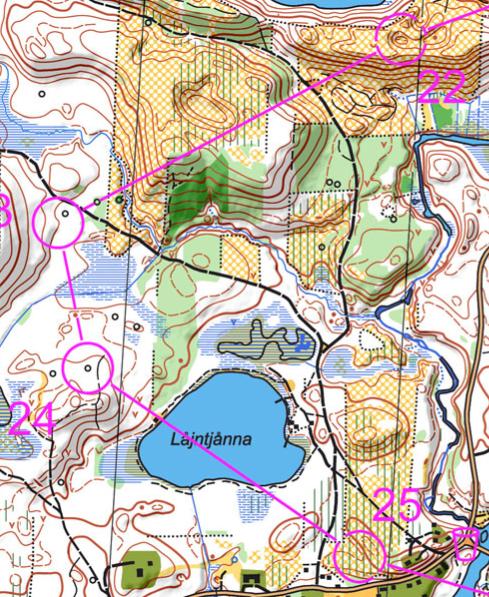
The leg from 21 to 22 was the last long leg in the race. Two shorter routechoice legs from 22-23 and 23-24 were offered before the physically hard finish of the race.

22-25

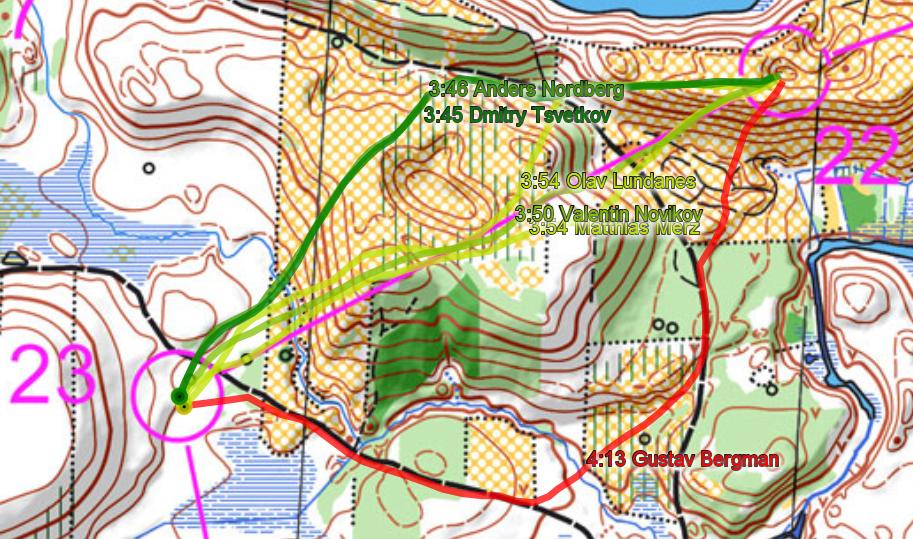
The leg from 22-23 does not give very big time differences, but it still seems clear from the split times that a northern variant is fastest – a few seconds faster than the direct variant of Novikov and Merz and the combination of northern/direct of Lundanes. THe southern variant of Bergman is far too long.

Men A-final: 22-23 (Legtimes)

1. Anders Nordberg 3:45 +0:00
2. Dmitry Tsvetkov 3:46 +0:01
3. Valentin Novikov 3:50 +0:05
4. Olav Lundanes 3:54 +0:09
5. Matthias Merz 3:54 +0:09
6. Marc Lauenstein 3:55 +0:10
7. Yuryj Tambasov 3:55 +0:10
8. Oleksandr Kratov 3:56 +0:11
9. Gernot Kerschbaumer 3:57 +0:12
10. Edgars Bertuks 3:57 +0:12

22-23_2

Men A-final: 22-23 (Total times)

1. Olav Lundanes 69:27 +0:00
2. Valentin Novikov 70:03 +0:36
3. Matthias Merz 70:35 +1:08
4. Anders Nordberg 71:02 +1:35
5. Marc Lauenstein 72:38 +3:11
6. Oleksandr Kratov 72:47 +3:20
7. Hans Gunnar Omdal 73:07 +3:40
8. Philippe Adamski 73:32 +4:05
9. Martins Sirmais 73:42 +4:15
10. Pavlo Ushkvarok 73:55 +4:28

In the overall a few more seconds earned for Novikov – now down at only 36 seconds lead for Lundanes.

Men 24-25

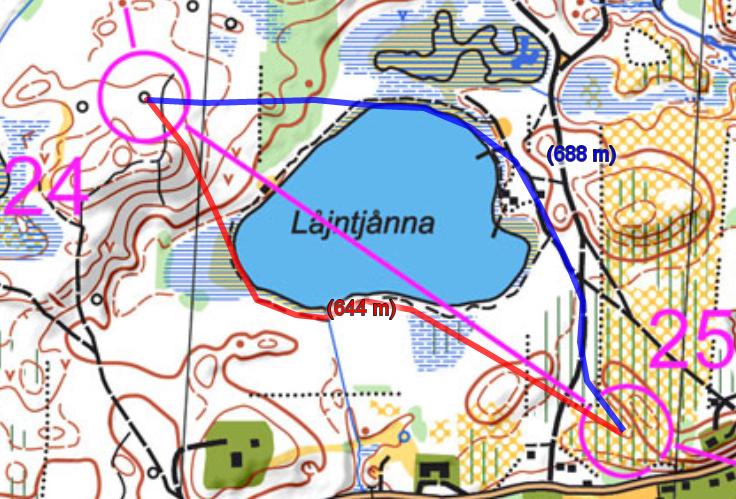
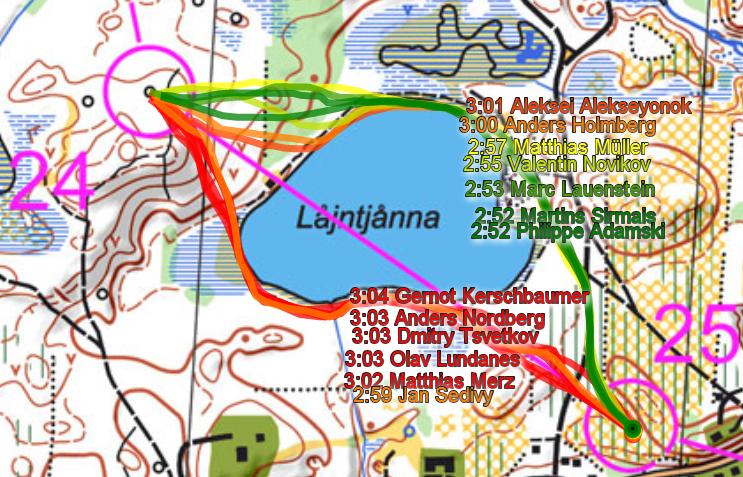
The leg from 24 to 25 is a classical “left or right around the lake” leg – which suprisingly both Lundanes and Merz got wrong. The right side is shorter – but the left is faster due to more path running.

24-252

The 7 best times are run to the north here – with Merz and Lundanes at 8th and 9th going south. It is probably 8-9 seconds faster to go north.

24-25

Men A-final: 24-25 (Legtimes)

1. Philippe Adamski 2:57 +0:00
2. Valentin Novikov 2:58 +0:01
3. Marc Lauenstein 2:58 +0:01
4. Martins Sirmais 2:58 +0:01
5. Matthias Müller 3:03 +0:06
6. Anders Holmberg 3:04 +0:07
7. Aleksei Alekseyonok 3:04 +0:07
8. Matthias Merz 3:05 +0:08
9. Olav Lundanes 3:06 +0:09
10. Dmitry Tsvetkov 3:06 +0:09

Men A-final: 24-25 (Total times)

1. Olav Lundanes 73:57 +0:00
2. Valentin Novikov 74:27 +0:30
3. Matthias Merz 75:04 +1:07
4. Anders Nordberg 75:36 +1:39
5. Marc Lauenstein 76:59 +3:02
6. Oleksandr Kratov 77:29 +3:32
7. Hans Gunnar Omdal 77:49 +3:52
8. Philippe Adamski 78:00 +4:03
9. Martins Sirmais 78:11 +4:14
10. Dmitry Tsvetkov 78:38 +4:41

With Novikov going north and Lundanes south, Lundanes’s lead has shrunk to only 30 seconds ahead of the physically tough finish! Merz is 1:07 down on Lundanes.

Last part

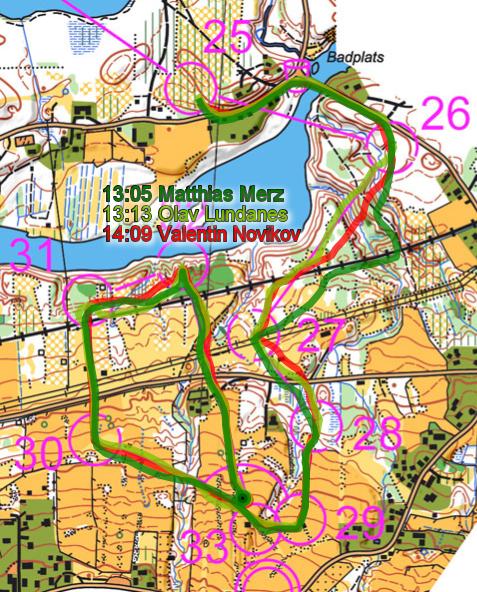
The last part is mostly physical  - the tough finish costing Novikov the silver medal which he has had in his pocket for more than an hour. Merz is strong – coming up in second spot.

25rest

Men A-final: 32-33 (Total times)

1. Olav Lundanes 87:25 +0:00
2. Matthias Merz 88:27 +1:02
3. Valentin Novikov 88:53 +1:28
4. Anders Nordberg 89:42 +2:17
5. Marc Lauenstein 90:29 +3:04
6. Oleksandr Kratov 92:18 +4:53
7. Philippe Adamski 92:35 +5:10
8. Dmitry Tsvetkov 92:37 +5:12
9. Hans Gunnar Omdal 92:54 +5:29
10. Frédéric Tranchand 93:19 +5:54
Lundanes versus Merz

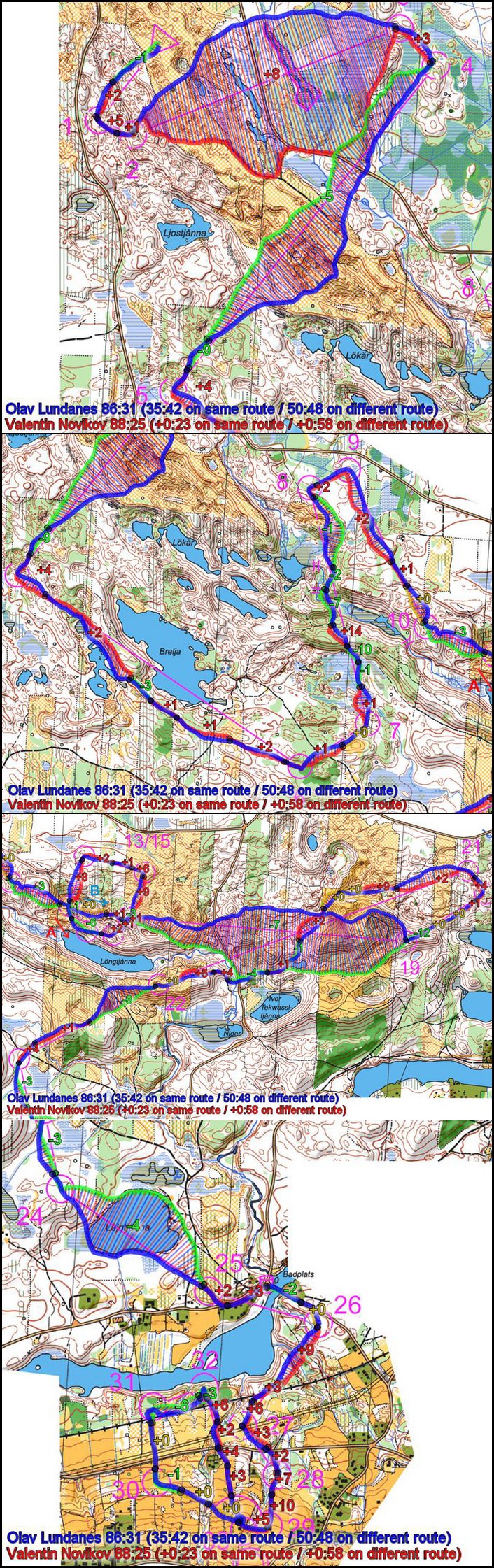
Below you see an AutOanalysis between gold medalist Olav Lundanes and silver medalist Matthias Merz. In the AutOanalysis you can clearly see the conclusions drawn above – with Merz loosing time on the routechoices to 6 and 8, and Lundanes loosing time on the route choice to 19 and 22. Also note hhow fast Merz is in the lower part of the small last loop.

imagelunmerz

Lundanes versus Novikov

Here also the AutOanalysis between Lundanes and Novikov. There is no segment with more than 12 seconds difference between Novikov and Lundanes! Very close races. Lundanes wins because he is stronger in the end and does slightly fewer of the small errors than Novikov does.

lundanes_novikov

Women’s race

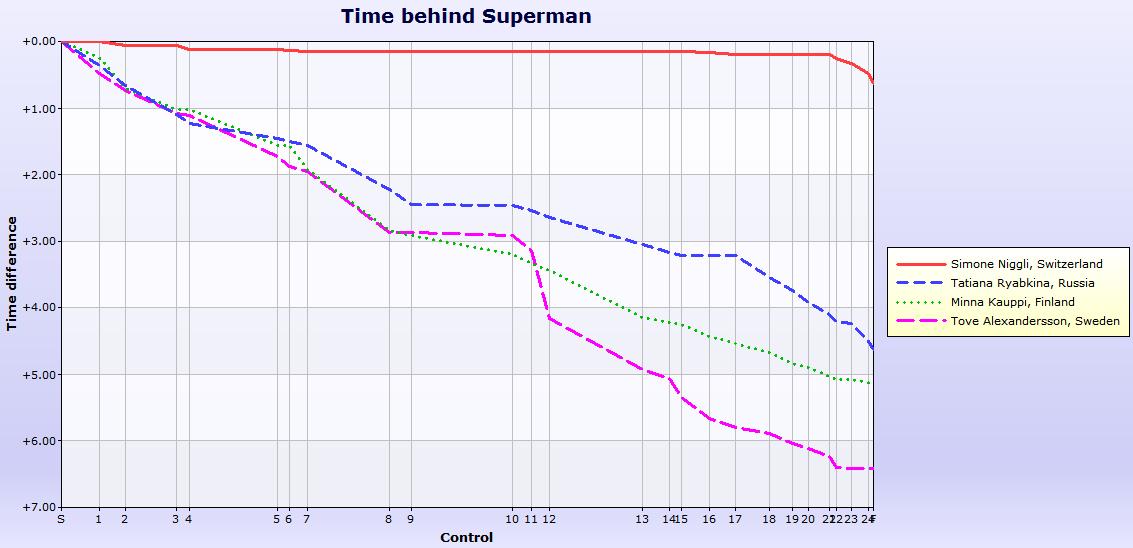
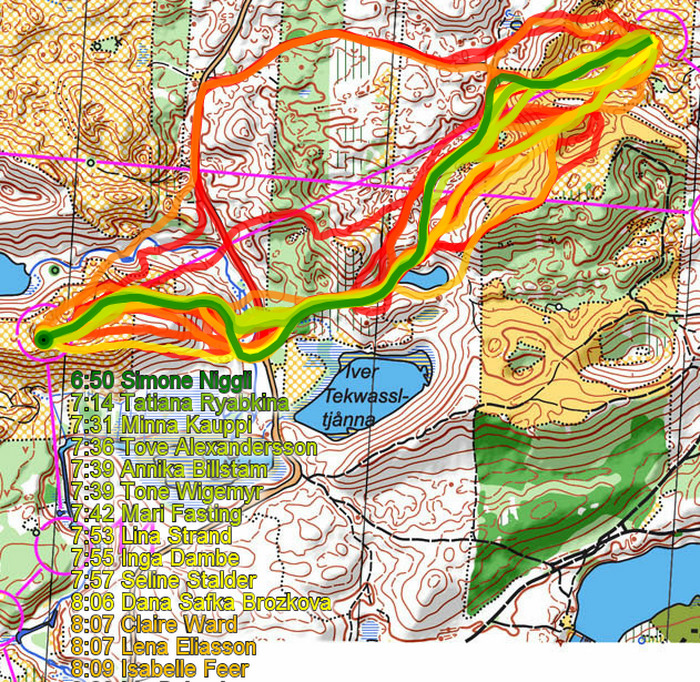
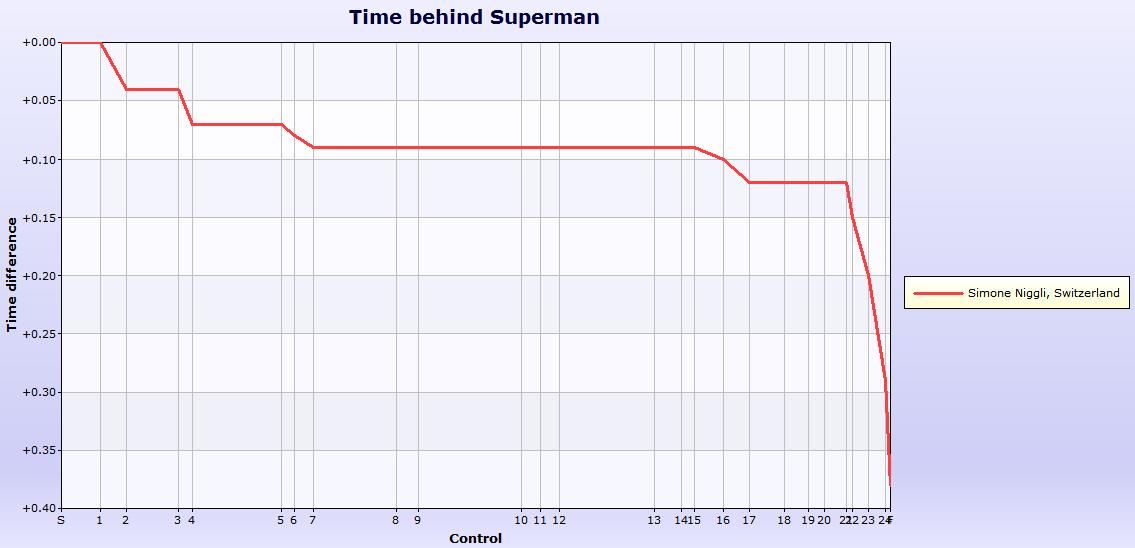
For the women’s race no full analysis is given, but illustrations are included. Simone Niggli is the fastest on most legs – winning 15 of 24 legs – loosing only 14 seconds to “Superwomen” until she got the message that she will win the race at the spectator control.

superman2

superman1

Niggli versus Riabkina

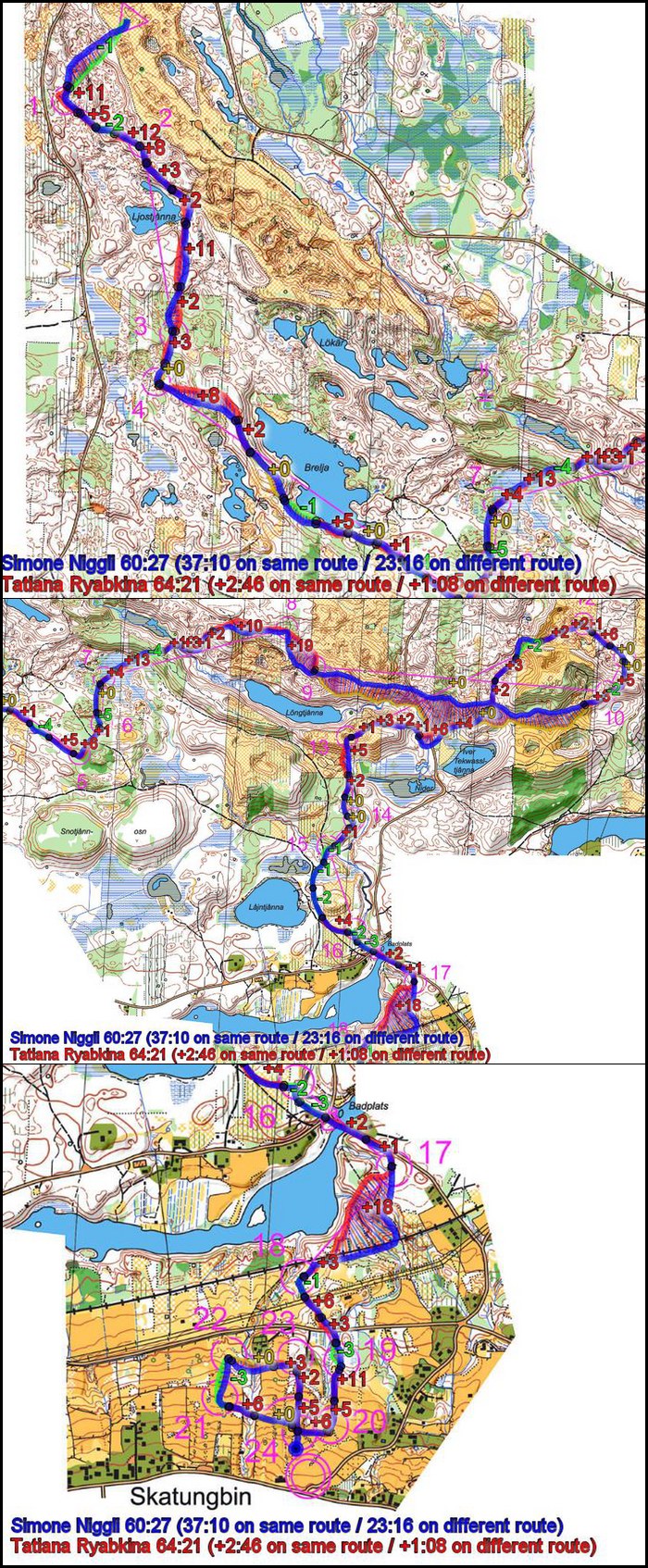
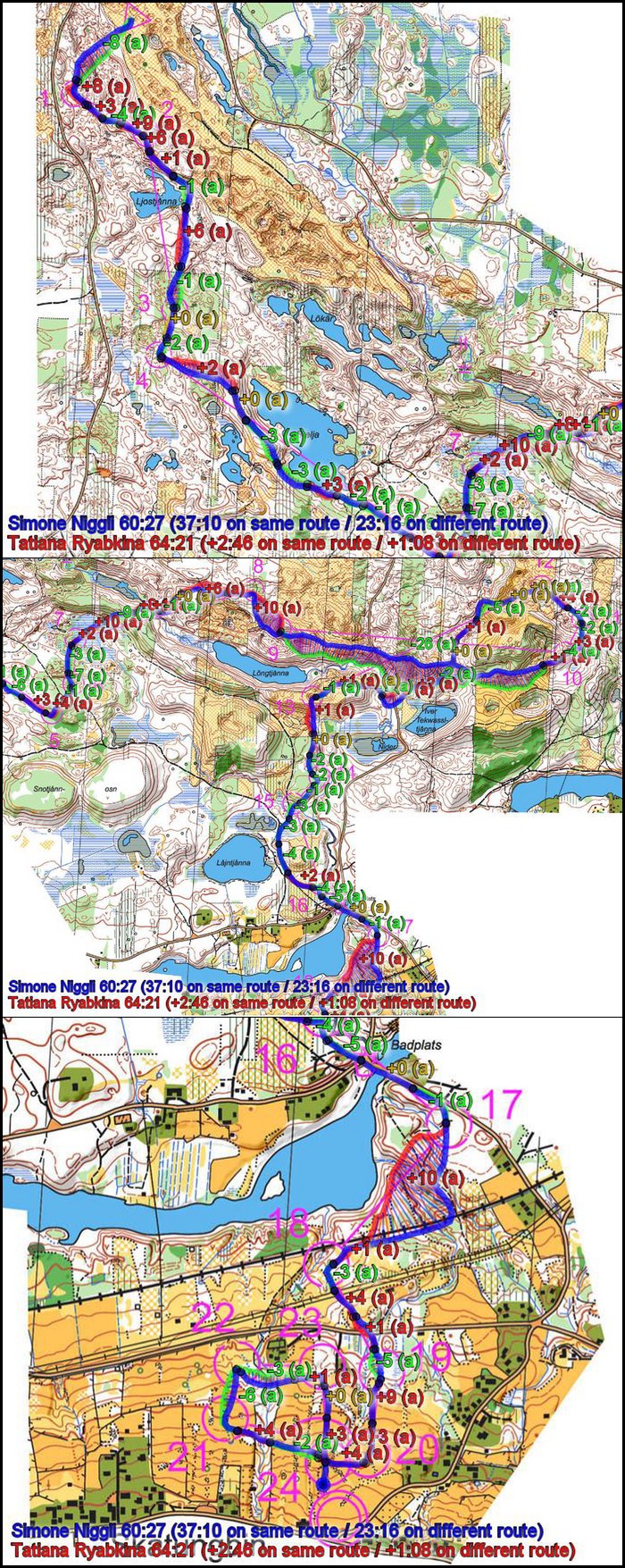
Comparing Niggli versus Riabkina gives a lot of red numbers in the autOanalysis – Niggli has simply been running faster all the way (except when Niggli and Riabkina were together for some controls). Therefore a second autOanalysis is also included (below the first one) where all times in Riabkina’s and Niggli’s routes are adjusted by the overall difference between them. Then it is possible to see more clearly in which parts of the race Niggli looses some time compared to Riabkina when adjusting for the difference in running speed. Relatively seen Niggli opens quite “slow” to the first control – as she also said in her interview. Then she has an amazing speed until control 3. Generally Niggli is very strong in the hills – both up and down.

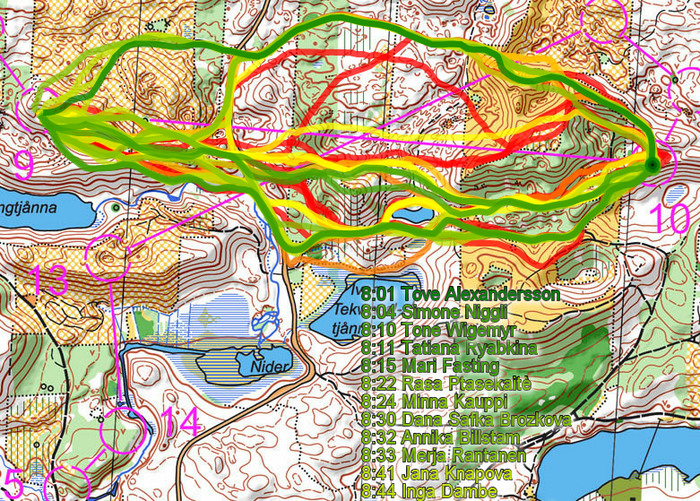
The only bad long leg for Niggli is the leg from 9 to 10 were she relatively seen looses some 20 seconds (although she is just as fast as Riabkina).

Riabkina looses some time around the 8th and 9th control – and also to control 18 and in the uphill in the end.

imagesimoneriab

imagesimoneriabadjusted

Women 2-3

The left side of the lake seems faster – and is also run by most runners.

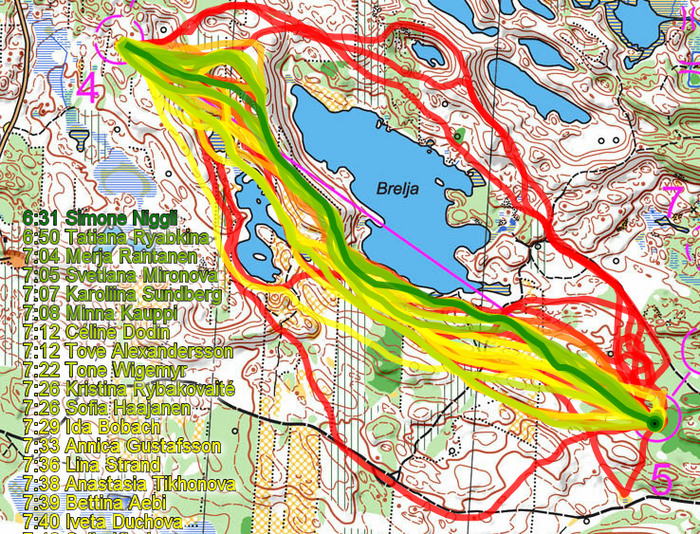
Women 4-5

The same leg as the men – and the same routes are the fastest: Direct variants!

Women 7-8

Again the fastest is to keep close to the line. Niggli crushes the others on this leg.

Women 9-10

Women 12-13

Thanks to Johan Fegar for very good help with making figures ! The analysis is made using 2DRerun/3DRerun.

EOC Middle Final: GPS Analysis

Posted by Jan Kocbach, 17 May 2012@19:00

Many route choice options and varied orienteering – that is what met the competitors in today’s middle distance final in the European Championships in Skattugnbyn, Sweden.

This article is part of the EOC 2012 GPS-analysis series. In a cooperation with the EOC 2012organizers, World of O/O-training.net will do GPS-analysis after each of the EOC races in Sweden the coming week.

Men Start-1 / Women Start – 1

Men:

0001

Women:

w0001_s

To the first control the best choise was clearly to go left which as you see on the routechoice statistics for both the men and women above. This was also the coursesetter Eva Jurenikova’s jugdement ahead of the event. One of the main reasons for so many runners choosing the rightmost route, is that the hill was very steep – and it was tempting to go right. I was out as a test runner in the morning, and even if I knew that left was supposed to be faster, I choose the rightmost option due to the tough hill.

One interesting point here: Both the European champions Lundanes and Niggli chose a non-optimal route. Lundanes went right and lost a few seconds. Niggli went direct(!) through the big depression – loosing nearly half a minute to Minna Kauppi!

Men 2-3 / Women 2-3

leg2

Men:
0203

Women:
lundnes_kaas4

From 2 to 3 there were two main choices – either left saving some height or right using a path for part of the leg. The rightmost choice using the path was tempting for many as this reduces the technical difficulty of the leg somewhat. However, based on the routes run it looks like the majority of fast times are run on the left variant. You should, however, make the last half of the route as short as possible (many took a too wide curve).

Interestingly, Olav Lundanes took the “wrong” choice again – but run fast. All four top women took the left option.

Men 5-6 / Women 5-6

leg6

Men:
0506

Women:
w0506_s

The leg from 5 to 6 was the leg in the course which spread the runners most. However the different routechoices were very equal in running time. The course setters favourite was the northernmost choise – which Olav Lundanes choose. However the choice of Kratov (going south all the way on the road) was nearly just as fast.

Men 8-9

leg9

0809

lundnes_kaas3

The leg from 8 to 9 was the longest leg in the mens class. The terrain did not invite to long routechoice-legs with very distinct routes – the “challenge” on this leg is the very last part of the leg. The left alternative is about 70 meters shorter – but you need to take a lot of extra, steep height. In addition you get more tricky control-taking by going left.

Based on the routes run – and also the course setters advice ahead of the race – the rightmost option were you go around the green area on the northern edge is the fastest.

Women 9-10

w0910_s

The women’s 9-10 waas not really a routechoice leg – a straight route was the only viable option. Still – typically of a middle distance – many runners lost time on the long leg due to the change in orienteering technique necessary. This was increased by the change in terrain characteristics

Men 12-13

leg13

1213

12132

lundnes_kaas2

The men’s leg 12-13 was an interesting leg. As you can see above, the fastest times were run on straight variants (don’t trust the split times above as these are GPS split times). Lundanes took time on the others here – the other Top 4 runners spreading well on different route alternatives. The straight variants are 60 meters shorter with not much more ascent – does it is clearly too far to take e.g. Carl Waaler Kaas’s route around to the right.

Men 16-17 / Women 11-12

leg17

Men:
1617

Women:
w1112_s

The leg from 16-17 for the men and the similar leg 11-12 for the women each had two distinct route choice alternatives: Either going right and using the big road and running a bit longer – or going left and taking more height while running shorter.

For both the men and the women, the left option up and down the hill has been run faster – however there is a big spread in running times for this route choice whereas runners running the rightmost routechoice have more consistently run good times.  Based on this the rightmost choise around the road might very well be the best option.

Do more yourself

The above analysis is done in 2DRerun – and all the GPS material is available there for you to do more analysis:

EOC Middle Qual: GPS analysis

Posted by Jan Kocbach, 14 May 2012@14:15

helena_tove2
The Middle Qualification opened the European Championships today – with all women runners carrying a GPS. Here you find a quick GPS analysis of the race. As this was a qualification race, focus is more on where the race was lost than on where it was won!

This article is part of the EOC 2012 GPS-analysis series. In a cooperation with the EOC 2012 organizers, World of O/O-training.net will do GPS-analysis after each of the EOC races in Sweden the coming week.

Jansson versus Alexandersson

The above illustration compares the routes of  two of the big profiles of this Europan Championships – Swedish Helena Jansson and Tove Alexandersson – finishing 1st and 2nd in Heat 3. As you can see (check out Jansson versus Alexandersson in 2DRerun for yourself to go further in the analysis), the main difference in this second part of the course seems to be running speed in the tougher parts of the terrain (yellow) and the last uphill.

See also:

Looks easy – can be tricky

bagstevold

The courses look seemingly easy when looking at them at the map, but still there were lots of mistakes made – mostly direction mistakes as you can see in the GPS-tracking from the women. A combination of running speed and good direction were the key ingredients to get to the finals. And of course accurate orienteering in the green areas.

One runner who had some problems in the start of the race was Norway’s Heidi Bagstevold. As you see on the illustration above, 45 degrees off already to the first control lost her more than half a minute. A bad compass direction to number 3 cost another 20 seconds – and then the big 3-minute mistake at number 6.  Happy ending for Bagstevold, though: She managed to keep the speed and secure her orienteering on the rest of the course, and made it to the A-final.

Direction

routechoicespreading

Looking at the spreading of routes on this leg from control 7 to control 8, it is obvious that straight is fastes (green color = fast). Looks like some might need to practice a bit more compass running before the A- and B-finals?

Although direct was faster in almost all legs today – there is no rule without exception. On the leg to number 11 (see below) it seems like the road option to the left is slightly faster. The reason for this is the tough terrain direct.

aroundfaster

EOC 2012 GPS analysis: Warm up with training-analysis

Posted by Jan Kocbach, 10 May 2012@8:00

In a cooperation with the EOC 2012 organizers, World of O/O-training.net will do GPS-analysis after each of the EOC races in Sweden the coming week. As a warm-up I have taken a brief look at some of the trainings in EOC-relevant terrain which have been uploaded to 3DRerun/2DRerun.

As running speed and focus has been different for the different runners, this analysis will more look at some examples from different EOC training maps than to look at a specific analysis. Still it can be good to take a look to see what kind of challenges the runners will meet in Sweden next week. You can also take a look at what the course setters say about the terrain and the challenges at the EOC webpage. - Those that ran pre-EOC and Elitserien at Bonäs in spring 2011 may be expecting similar, extremely fast pine heath terrain with sandy ridges. Sure, there are similarities with Bonäsheden but the terrain in Skattungbyn is more varied, many of the ridges are higher, the depressions deeper and the amount of detail greater.

Sample 1 (a): Run straight lines

This sample is from a one-man relay training at Åmotjärn 2. Typical for this terrain is many small hills with some some open forest, some greener areas and some marshes. In many cases the fastest route is to stay as close to the line as possible – and in this example you can see how staying close to the line usually gives you an advantage of some seconds compared to making curves out.  Open sample in 2DRerun.

sample1b

Sample 1 (b): Direction mistake – underestimating difficulties

Control number 20 above is one control were many runners did a direction mistakes. It is actually a quite easy control if you pay attention to direction and contours (to the left of the line) and the big path (the small path might be tricky to see?). The big path just ahead of the control makes you think the control is very easy – that is probably a reason for the many mistakes here. Open in 2DRerun.

sample1

Sample 2: Run straight lines II

The second sample is from an EOC training on the map Vika. Compass and running straight is again important in this second example, even if the terrain characteristics are quite different. The example clearly again shows how all the small detours you take away from the line costs you a few seconds here and a few seconds there.  The straight route choice is by no means the best choice for all legs in the EOC terrain – but in the cases where it is, you should use your compass and run straight. Open sample in 2DRerun here to take a closer look at it.

However: Don’t get fooled by the examples above – there may also be legs in this terrain-type where routechoices will be decisive! Both micro-routechoices and longer routechoices – so the straight line is not always the best approach – however make sure that you can run straight wherever it is necessary.

sample2

Sample 3: Speed adaption training, Gesunda

The third example is a speed adaption training in Gesunda – on a snowy day which you can read about on Gustav Bergman’s Doma-archive (Kerschbaumer was there the same day). Two of the worlds best orienteers who are among the favorites at the upcoming EOC  - a bad day for both of them – they hopefully learned a lot before returning to the Falun-area next week!  - A legendary bad performance. I don’t know what I shall say, is Bergman’s comment on his Doma-archive. The snow surely did not improve the concentration, but you should not fall asleep mentally on the long legs in this terrain. Also for the legs down the hills the tactics should be put on making the control easy to find. See example in 2DRerun here.

sample3

Next Page »